Author name: editor

NULL
1948, Pathfinder Magazine, Recent Articles, Winston Churchill

The Gathering Storm
(Pathfinder Magazine, 1948)

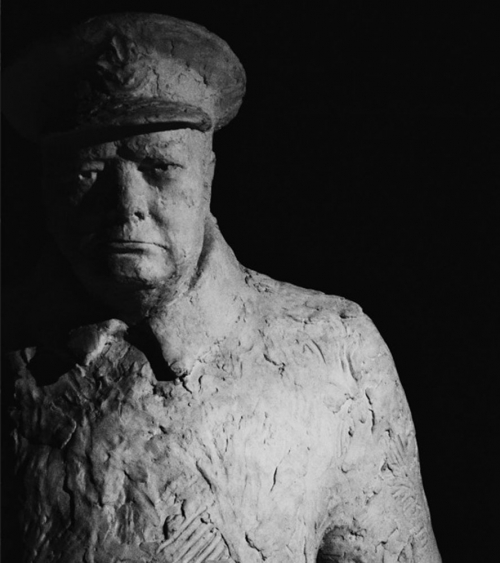
This is the Pathfinder book review for the first in Winston Churchill’s monumental six-volume account of the struggle between the Allied Powers in Europe against the Axis during the Second World War. Told from the unique vantage point of a British prime minister, it is also the story of one nation’s heroic role in the fight against fascist tyranny. When the other volumes in the series were completed, in 1953, Churchill was awarded the Nobel Prize for Literature for his effort.
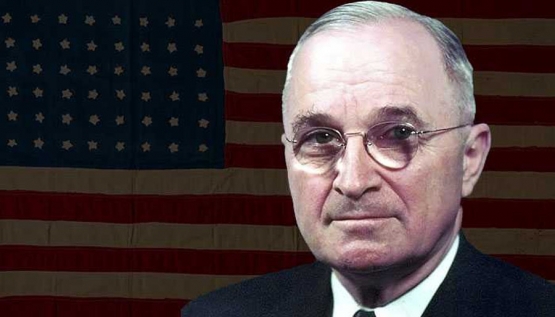
Minesota Representative Walter Judd and the Korean War 1950 | President Truman Commits to the Korean War 1950
1950, President Truman, Quick Magazine, Recent Articles

Truman Decides to Defend South Korea
(Quick Magazine, 1950)

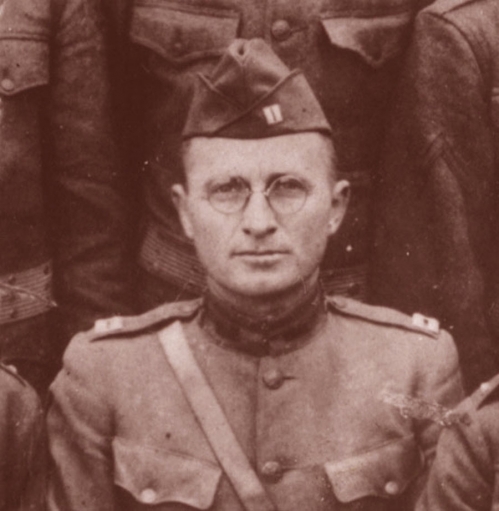
“[Truman’s] fateful decision to send U.S. planes and ships into the Korean fighting was made with advice of Representative Walter Judd (1898 – 1994: R., Minn.). Judd had been sharply critical of U.S. Far Eastern policy on grounds that it was opening the doorto Communism. The day after fighting started, State Department officials asked Judd’s advice on procedures for helping South Korea.”

Harry Truman's First Day in the White House April 14 1945
1945, PM Tabloid, President Truman, Recent Articles

Truman’s Busiest Day
(PM Tabloid, 1945)

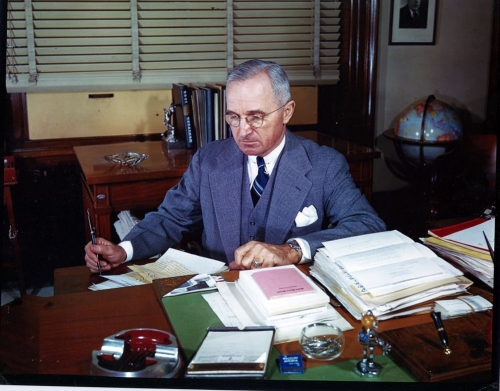
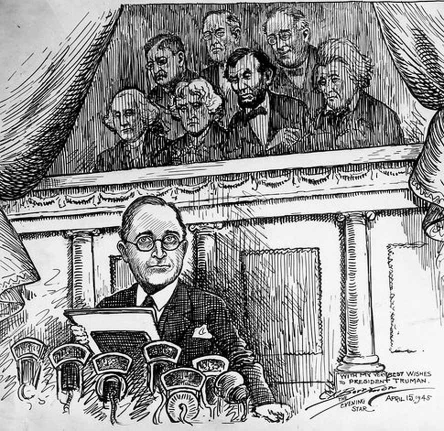
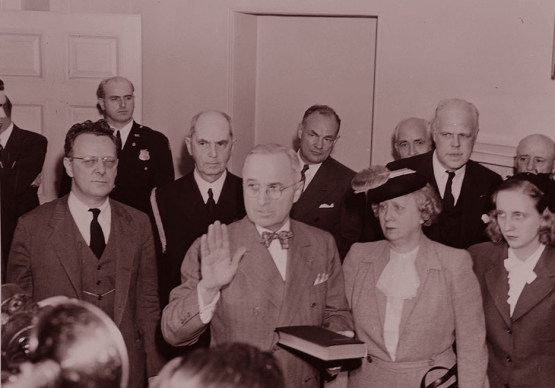
April 14, 1945 is remembered as President Truman’s first day as Chief Executive. FDR died on the twelfth and he was sworn-in shortly after that. Just what he did with the rest of that day, much less on the thirteenth, is a mystery to me – but, let it be known here and now that his first day exercising his Presidential Authority was on the fourteenth. He met with the brass caps from the Pentagon, planned speeches, spoke on the telephone with numerous New Deal big-wigs and shook many, many hands. All involved were in agreement that it was the busiest day in his life.

Advertisement

Use shortcode [oma_ad position="summary_top"] (or other position) in your theme or widgets to display OMA Promotions here.

Advertisement

Use shortcode [oma_ad position="summary_top"] (or other position) in your theme or widgets to display OMA Promotions here.

President Harry Truman Political Education 1947 | Truman Doctrine Explained
1947, Collier's Magazine, President Truman, Recent Articles

The Further Education of Harry Truman
(Collier’s Magazine, 1947)

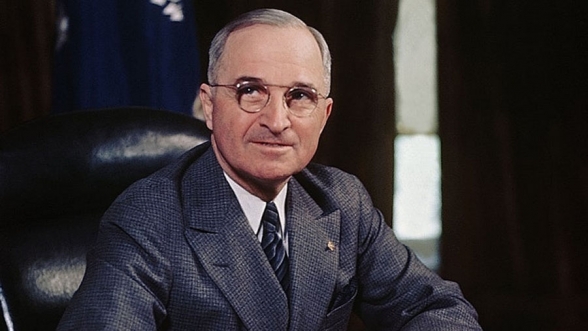
President Harry Truman (1884 – 1972) Came to the presidency following the death of FDR on April 12, 1945. He said of the post, “I wasn’t briefed for the job, I had to learn it from the ground up”; by 1947, he was no longer “Roosevelt’s stand-in, reading from a New Deal script” – he was his own man and this was becoming clearer and clearer to his critics in Washington. This article, by Frank Gervasi (1908 – 1990), covers Truman’s earliest years in the White House, and his handling of some of the hotest potatoes that landed in his lap.


What was the Truman Doctrine?

NULL
1949, Pathfinder Magazine, President Truman, Recent Articles

When President Truman Tried his Hand at ”Distributing Wealth”
(Pathfinder Magazine, 1949)

It seems like a tough nut to swallow, but 12 years before President Obama was even born – U.S. President Harry S. Truman plugged the idea of ‘wealth distribution’ as a portion of a piece of proposed legislation that has come to be known as the “the Fair Deal”. The president’s scheme was introduced to the nation in his 1949 State of the Union address, it was composed of “21 points” and the element that is discussed in the attached article involving distribution of income was called the Brannan Plan – for it was U.S. Secretary of Agriculture Charles F. Brannan (1903 – 1992) who was its advocate. Secretary Brannan wanted the government to establish a guaranteed income for farmers, while allowing the market forces to determine the prices of agricultural products.

Advertisement

Use shortcode [oma_ad position="summary_top"] (or other position) in your theme or widgets to display OMA Promotions here.

Mistreatment of American POWs by German Military | American POWs forced to March to Prison Camp 1944-5
1945, PM Tabloid, POWs, Recent Articles

U.S. POWs Singled Out for Abuse
(PM Tabloid, 1945)

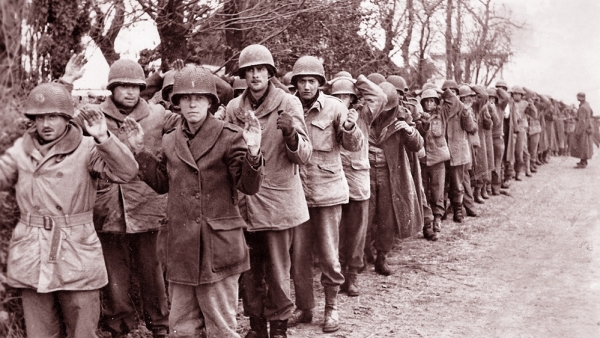
PM war correspondent Victor Bernstein filed this story three weeks before VE-Day concerning a 180-mile forced march that was the lot of assorted Allied prisoner of war in Germany. Numerous interviews with the survivors of the march revealed that the Nazis lording over as many as 4,000 POWs choosing to brutalize the U.S. prisoners in much the same way they abused Poles and Soviets. British POWs seemed not to attract their ire.

Conversations in London Bomb Shelters 1941 | Savoy Hotel During the London Blatz 1941
1941, Battle of Britain, Collier's Magazine, Recent Articles

London Under the Bombs
(Collier’s Magazine, 1941)

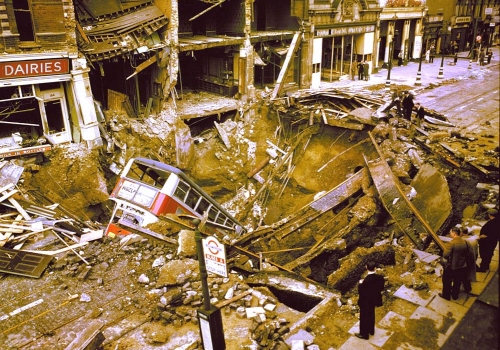
“A German plane dropped a flare. Then the inevitable stick bombs followed and the Savoy [Hotel] trembled. I looked and winced. Two large fires were reaching up into the night. This dwarfed any Blitz I have ever seen. Still both incendiaries and high-explosives screamed down. The night was filled with noise – all of it frightening noise. And above the planes still roared. It was so light that the balloons could be seen clearly. Now and then there would come the rattle of machine gun fire, hardly heard over the crackling of fires and the noise of the bombs. But it told us that the night fighters were up there.”

Advertisement

Use shortcode [oma_ad position="summary_top"] (or other position) in your theme or widgets to display OMA Promotions here.

Max Lerner VE-Day Editorial Column 1945 | VE-Day was a Great Time to be Alive
1945, PM Tabloid, Recent Articles, VE Day

A Great Time to be Alive
(PM Tabloid, 1945)

It is our wish to successfully give utterance to the true feelings from each era that we are able to represent on this website; for this reason, we posted the attached column by Max Lerner (1902 – 1992), in which he expresses his excitement as to how great it was to be alive in one of the Allied nations at the time of Hitler’s demise.


“The two big fascist leaders in whose shadow our whole generation has lived – Mussolini and Hitler – are now lying dead amidst the ruins of their empires, one following the other in the space of a few days…We are not only the anvil. We are the hammer. To know that is to grow in stature in a great time.”

Advertisement

Use shortcode [oma_ad position="summary_top"] (or other position) in your theme or widgets to display OMA Promotions here.

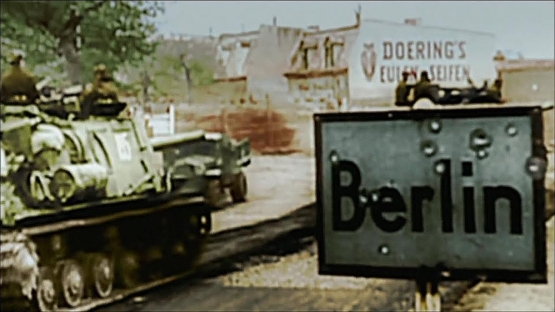
Street Fighting in Berlin 1945 | Red Army Enters Berlin April 1945
1945, Eastern Front, PM Tabloid, Recent Articles

The Drive on Berlin
(PM Tabloid, 1945)

“Flags of two new kinds are flying in the city – white flags displayed by the panic-stricken populace, and the first Soviet flags that, Reuters says, are hoisted over what tall buildings are left within the captured districts. Three Soviet guards carried a blood-soaked banner 2000 miles from Stalingrad to Berlin. Pravda says the soldiers kneeled and kissed the flag and then raised it over a ruined building.”

WW2 Ukraine 1941 | Bialystok Ghetto 1941
1941, Collier's Magazine, Eastern Front, Recent Articles

A Pen-Picture of the Devastated Soviet Union
(Collier’s Magazine, 1941)

After touring thousands of miles with a German press-pass throughout Nazi-occupied Russia, American journalist Hugo Speck (1905 – 1970) gave a thorough picture of the violence visited upon that land by both Armies:


“German-occupied Russia is in rags and ruins; huge sweeps of European Soviet territory have been systematically destroyed, partly by the Russians themselves and partly by the devastation of Stukas, panzers, guns and fire…”

Advertisement

Use shortcode [oma_ad position="summary_top"] (or other position) in your theme or widgets to display OMA Promotions here.

Scroll to Top