Author name: editor

Advertisement

Use shortcode [oma_ad position="summary_top"] (or other position) in your theme or widgets to display OMA Promotions here.

Life During the Blitz on Britain | Sculptor Clare Sheridan During WW II
1941, Battle of Britain, Collier's Magazine, Recent Articles

Life Under Siege
(Collier’s Magazine, 1941)

Here is an account of life during the Blitz, as written by sculptor Clare Sheridan (née Frewen; 1885 – 1970):


“I have from the very beginning put [poison] gas out of my thoughts and refused to carry a gas mask. But in a mad world growing madder daily who knows what the madmen may not resort to!… According to the gas booklet, the stuff will come through the window clacks, under the door and down the chimney.”

British War Labor 1941
1941, Battle of Britain, Collier's Magazine, Recent Articles

”Workingman’s War”
(Collier’s Magazine, 1941)

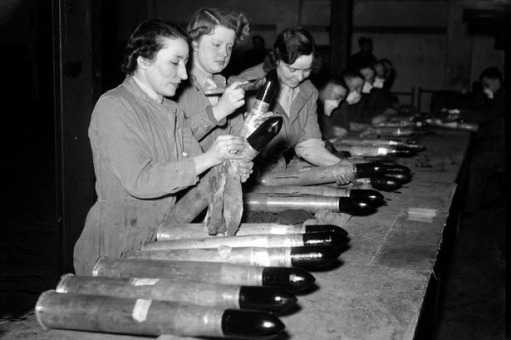
This 1941 Collier’s article looks at the British working class during the Blitz on London. Numerous men and women were interviewed concerning their aspirations and hopes for the post-war world. Much is written about the 300 free kitchens that were placed throughout London to accommodate them as well as the free schools that were instituted to train war plant workers how to use the various machines needed to create the necessary war materinél.


“Hitler isn’t making war against capitalism, as he says he is. He’s not the great proletarian he brags he is, but is instead deliberately bombing civilians, their schools, churches, homes and hospitals in order to throw the civilian population into despair and terror. Well, he has failed.”

Advertisement

Use shortcode [oma_ad position="summary_top"] (or other position) in your theme or widgets to display OMA Promotions here.

NULL
1944, Battle of Britain, Recent Articles, Yank Magazine

”Buzz-Bombs Blitz”
(Yank Magazine, 1944)

Launched by air or from catapults posted on the Northern coast of France, the German V-1 “Buzz-Bomb” was first deployed against the people of London on June 12, 1944. Before the V-1 campaign was over 1,280 Britons would fall on greater London. 1,241 of these rockets were successfully destroyed in flight.

Accompanied by a diagram of the contraption, this is a brief article about London life during the “Buzz-Bomb Blitz”. Quoted at length are the Americans stationed in that city as well as the hardy Britons who had endured similar carnage during the Luftwaffe bombing campaigns earlier in the war.

Aberdeen Proving Ground 1944 |
1944, Recent Articles, See Magazine, Weapons and Inventions

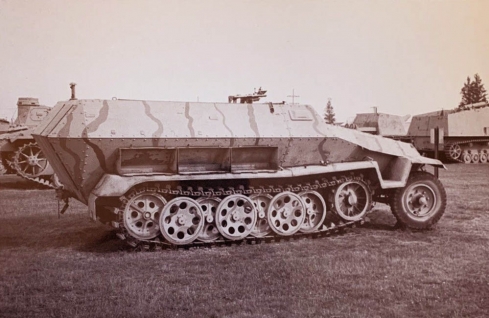
Examining Axis War Material
(See Magazine, 1944)

This article tells of the U.S. Army Ordnance Corps and how they go about turning enemy weaponry inside-out in order to gain a full understanding of Axis capabilities:


“Every gun, from the smallest side-arm to largest howitzer, every tank, truck or other conveyance, every airplane and item of equipment abandoned by the retreating enemy, whether it be emergency ration or new type haversack falling into Allied hands, is carefully scrutinized for tell-tale clues to [the] foe’s tactics and resources.”

History of Scalping in America |
1961, First Nations, Recent Articles, Sir! Magazine

Scalping: An Anglo-Saxon Practice
(Sir! Magazine, 1961)

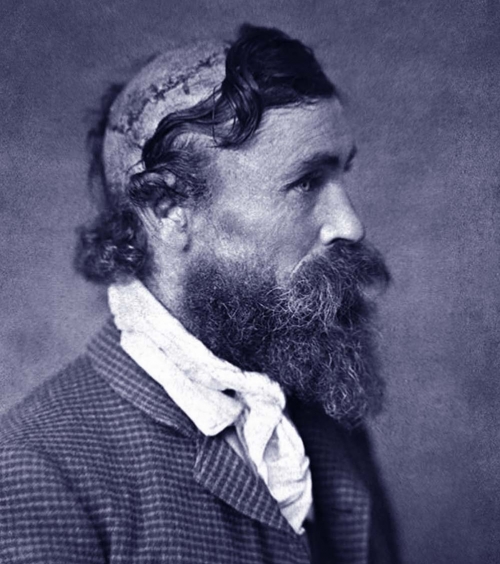
Congratulations: you found the goriest article on the site – it goes into some detail concerning the practice of scalping. The journalist insisted that the Mohawk leader Joseph Brant (né Thayendanegea, 1743 – 1807) imparted this historic fact to his family, who, throughout the centuries, have told it to anyone who would listen – the info he relayed to them was that scalping was an English import, not native to the Americas. The article goes on to explain that this was one of those cases in which the pupil far surpassed the teacher and proceeds to list all the many ways the native population had inflicted scalping upon all her various enemies throughout North America.

Advertisement

Use shortcode [oma_ad position="summary_top"] (or other position) in your theme or widgets to display OMA Promotions here.

Expansion of American Military Power 1941 - 1944 | What Makes America So Powerful
1945, Aftermath (WWII), Liberty Magazine, Recent Articles

The American Leviathan
(Liberty Magazine, 1945)

Between the years 1941 and 1945 the United States achieved a level of power that the tyrants of yore only dreamed about:


“Clearly here was a phenomenon to make anyone sit up and take notice – a new kind of military machine, a new kind of global power that apparently could be delivered anywhere in the world, at any time… By building 75,000 to 100,000 planes yearly and by improving planes and motors, we have emerged suddenly as an air power…No other nation has made a comparable investment in carrier aviation. No other nation would dare to put an expeditionary force to sea against a nation strong in carriers and land -based aircraft…With the object of defending ourselves, we have solved one problem after another until we have stumbled on a formula for conquering most of the world.”


A similar article appeared twenty years earlier…

Fallschirmjaeger artikles 1941 | German Paratroopers History 1941
1941, Collier's Magazine, Paratroopers, Recent Articles

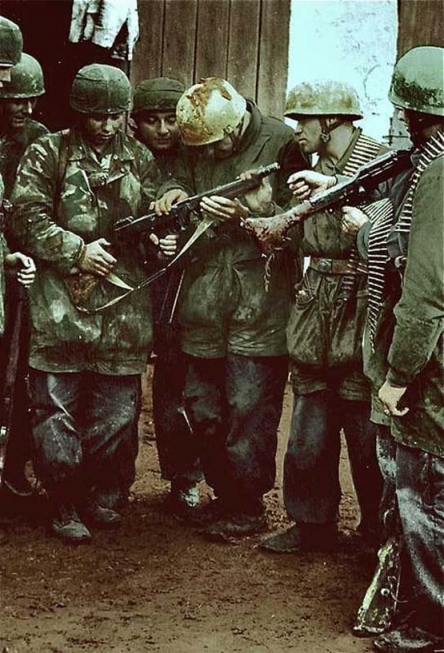
The German Paratroopers
(Collier’s Magazine, 1941)

This 1941 article lays out the brief history of airborne infantry before the author begins to recall the origins, training and victories of the W.W. II German paratroopers:


“The origin of parachute usage in warfare is obscure. They were extensively employed in the Great war to land spies and saboteurs. It is also of record that in 1917 General [Billy] Mitchell tried to persuade General Pershing to permit him to form an experimental troop of parachute fighters. Thus Mitchell was probably the first man professionally to express the notion of paratroopers… It was in 1935 that Hitler ordered Goering to organize paratroopers…[In Germany] the parasoldier is an object of curiosity to the elders, of envy to the youth. He is bound to be questioned and bound to do a sales job in educating the public, as you would say.”

Harold Ickes Energy Policy 1942 | Coal and Oil Regulated by Harold Ickes 1942
1942, F.D.R., Liberty Magazine, Recent Articles

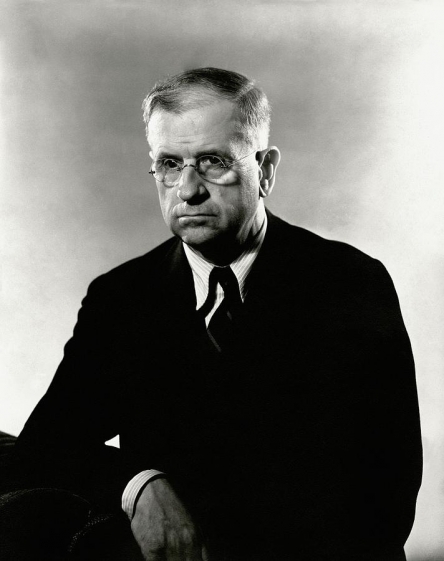
Harold Ickes: FDR’s Gas Czar
(Liberty Magazine, 1942)

This article was published one month after the start of the war; it must have been a time when everyone had something to say about Harold Ickes (1874 – 1952) as he was composing the gas rationing laws for the home front. In this column, Ickes speaks for himself. He had been the one who saw to the President’s energy policy’s during the Great Depression and now he was FDR’s go-to-guy for gas during the war.

Advertisement

Use shortcode [oma_ad position="summary_top"] (or other position) in your theme or widgets to display OMA Promotions here.

Eye-Witness-Account of General Patton at the End of WW II
1945, PM Tabloid, Recent Articles, World War Two

One Journalist’s Encounter with General Patton
(PM Tabloid, 1945)

We have no idea who Tom O’Reilly was – beyond what can be immediately conjectured, that he was a staff columnist with PM, and so admired that they thought it a grand idea to clean him up and send him off to see Nazi Germany in its death throes. O’Reilly had a very candid, off-the-cuff manner of writing, which came across as quite humorous when he explains how unimpressed he was with General Patton’s dramatic appearance.

Military Psychiatry 1950 - 1953 | American Neuro-Psychiatric Casualties in the Korean War 1952
1952, Collier's Magazine, Recent Articles, The Korean War

Military Psychiatry Up Front
(Collier’s Magazine, 1952)

Having learned a good deal from two world wars concerning the fragile nature of soldiers and Marines who suffered from battle fatigue, the U.S. Army Medical Department sent hastily trained psychiatrists to the forward positions during the Korean War in order to better serve these men – and get them back to battle. The Atomic Age name for battle fatigue is neurotic psychiatric casualty

Advertisement

Use shortcode [oma_ad position="summary_top"] (or other position) in your theme or widgets to display OMA Promotions here.

First Battle of Bull Run News Article 1861 | Henry J Raymond Civil War Article 1861 | Union Retreat from Bull Run Battle harper's Weekly
1861, Civil War History, Harper's Weekly, Recent Articles

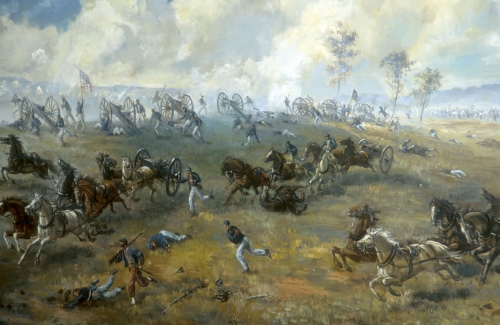
The Battle of Bull Run
(Harper’s Weekly, 1861)

Here is an eyewitness report of the Union rout from the first battle of the Civil War, Bull Run (July 21, 1861):


“Leaving my carriage, I went to a high point of ground and saw, by the dense cloud of dust that rose over each of the three roads by which the three columns of the [Federal] Army had advanced, that they were all on the retreat. Sharp discharges of canon in their rear indicated that they were being pursued.”

Japanese Atrocities in China 1931 - 1945
1942, Liberty Magazine, Recent Articles, Sino-Japanese Wars

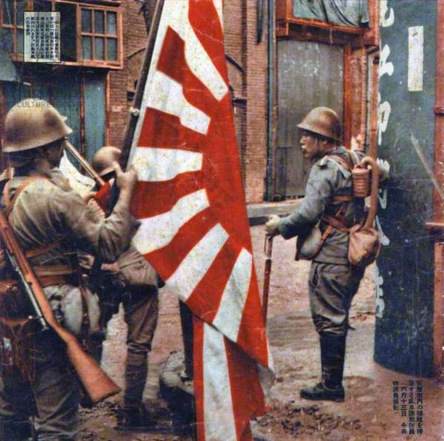
Japanese Atrocities in China
(Liberty Magazine, 1942)

Hallett Abend (1884 – 1955) was an American journalist who lived in China for fifteen years. He covered the Sino-Japanese War during its early years and had seen first-hand the beastly vulgarity of the Japanese Army. After Pearl Harbor, the editor at Liberty turned to him in hopes that he would explain to the American reading public what kind of enemy they were fighting:


“In four and a half years of warfare [in China], the Japanese have taken almost no prisoners… Chinese prisoners of war are shot.”

Tank Battles Reported in Libya 1942 | British Armoured Forces in Libya 1942
1942, Liberty Magazine, North Africa, Recent Articles

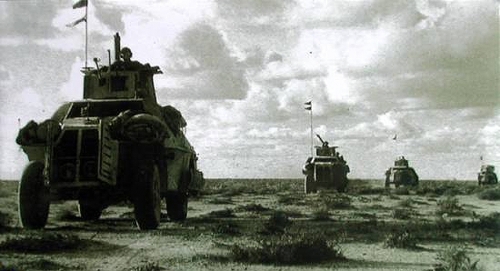
Clash of the Titans in Libya
(Liberty Magazine, 1942)

This is a primary source article by a reporter who rode in the armored vehicles of the British Army during the Libyan campaign of 1942:


“It seemed incredible that in the melee either side could know whom or what they were firing at. The best I could do was identify the burning tanks: white smoke for the petrol-driven British – black smoke for the Diesel oil of the German tanks. There was plenty of both.”

Advertisement

Use shortcode [oma_ad position="summary_top"] (or other position) in your theme or widgets to display OMA Promotions here.

Scroll to Top