

The Anti-Barbed Wire Gun
(Literary Digest, 1919)
A black and white photograph of the seldom remembered French anti-barbed wire gun.
Another anti-barbed wire invention can be read here…

A black and white photograph of the seldom remembered French anti-barbed wire gun.
Another anti-barbed wire invention can be read here…

Motor camping is in it’s infancy, observed the shrewd and sure-footed motoring journalist George W. Sutton in this 1921 VANITY FAIR report regarding the evolution of campers. To further illuminate his readers, he provided black and white plans illustrating the interior of two campers mounted on the back of Ford chassis (during the 1920s, Ford Model Ts were by far the most common make of automobile). Although there were a handful of camper-shell manufacturers at the time, the two featured here were custom made.

A rare action photograph of an unidentified car and driver smashing into the crowd-control fencing at the Vanderbilt Cup Races held in Santa Monica, California during the summer of 1914. The unstoppable juggernaut was cruising at sixty-miles miles per hour.
Click here to read about the historic trans-Atlantic flight of Charles Lindbergh.
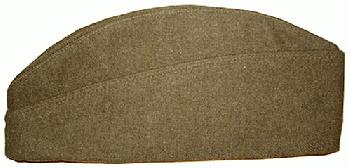
A NEW YORK TIMES correspondent reported from Washington what the official line was as to why the U.S. Army had seen fit to toss out the campaign hat in preference to the European-style Overseas cap:
When the Americans entered the trenches, said an official statement today, it was found that the brim of their campaign hat interfered with sighting through the trench periscopes and that the high crown, in the case of tall men, could be seen above the parapets. The new cap is so low that it permits the men to move with the same freedom as when they are hatless.

A STARS & STRIPES clipping from 1919 announcing to both Army and Marines that the era of the overseas cap had arrived and was not going away anytime soon:
The overseas cap, which has (not) protected its wearers from the rains of sunny France and the suns and snows and sleets all over the A.E.F., will be permitted to remain the official headgear of the returning troops after they get back to the States.

In 1913 a very strong, anti-Federalist step was taken to amend the Constitution and alter the manner in which U.S. Senators were to be selected and replaced in the event of vacancies. The 17th Amendment was passed: it guaranteed that senators would no longer be elected from within the legislative bodies of the state governments, but would be elected directly by the citizens of their respective states, just as the representatives are. Historian Everett Kimball pointed out in this article how the 17th Amendment altered the very nature of the U.S. Senate.

The attached three page article about John Wayne appeared at the very doorstep of the Fifties – the decade that was uniquely hisown. The uncredited Hollywood journalist who wrote this column was doing so in order to announce to the reading public that Wayne was coming remarkably close to being the top box office attraction:
Wayne reached this eminence by turning out film after film for 18 years. Working with a steady, un-nervous strength for four studios: Republic, RKO, Argosy and Warner Brothers. – he shifts back and forth between Westerns, sea-epics and war pictures. With each movie he makes (most of them re-hashes of of standard action-film plots, but a few of them film classics), his fans grow.
A short profile on Paul Terry, torn from the pages of a prominent Hollywood trade rag:
During Paul Terry’s notable career in the film industry, he has produced more than 1,000 pictures. In October of the current year he celebrates 25 years of continuous work in the cartoon field, which he helped to pioneer.
Today, the fountain of Terry-Toons is a thoroughly modern studio in New Rochelle, employing some 130 hands, all skilled in the imparting of life, voice and voice expression to the characters created on the drawing boards.

All told, the animated cartoon series Tom and Jerry would be awarded seven (7) Academy Awards before Oscar’s attention turned elsewhere.
This 1946 article sings the praises of Fred Quimby (1886 – 1965), the animation producer who ran the shop at the Metro-Goldwyn-Mayer cartoon studio between the years 1937 and 1954:
Doff the cap to Metro-Goldwyn-Mayer’s Fred Quimby, producer of Tom and Jerry’, the only cartoon stars to have copped the coveted Oscar for two consecutive years. Even the distinguished Donald Duck has only been Oscarized once.
‘Tom and Jerry‘ reflect in broad comedy the faults and foibles of human beings, even as you and I. Here we have a thoroughly egotistical cat and a very shrewd mouse… a cartoon representation of the eternal conflict between HERO and VILLAIN. Toma always hopes to outwit Jerry who symbolizes the underdogs of the world.
This short notice appeared in The Lion’s Roar, which was the monthly publicity rag for M.G.M. Studio.

A smattering of opinions on the subject of VJ Day (they all seemed to have been in favor of it) were offered up by a collection of Rome-based American soldiers composed of assorted hues and ranks.

This column, by First Lady Eleanor Roosevelt, was an articulate effort at make some sense of her husband’s death, which took place during one of the most critical periods in world history:
Perhaps in His wisdom, the Almighty is trying to show us that a leader may chart a way, may point out the road to lasting peace, but that many leaders and many peoples must do the building. It cannot be the work of one man, nor can the responsibility be laid upon his shoulders, and so when the time comes for peoples to assume the burden more fully, he is given rest.
Alfonso XIII of Spain (1886 – 1941) is remembered as a pretty level-headed guy, but non the less, it was news items like this one that made Karl Marx first dip his nib in the inkwell…

Attached are excerpts from a few 1929 British newspapers that condemned all efforts made in Hollywood to produce talking pictures; one snide reviewer went so far as to insist that rather than calling the films talkies, they should be referred to as dummies:
The majority of films in the future will be made stupidly for stupid people, just has been the case with the silent movies for twenty years…

Here is the brief text to President Lincoln‘s very eloquent second inaugural address, that was delivered during the closing weeks of the Civil War.

The GIs had managed to keep their VJ spirit bottled up through most of the phony rumors, but when the real thing was announced the cork popped with a vengeance. A spontaneous parade, including jeeps and trucks and WACs and GIs and officers and nurses and enlisted me, snaked from the Red Cross Club at Rainbow Corner down to the Place de l’Opera and back…

A printable article from a 1948 Hollywood fan magazine that illustrated quite clearly how much easier Ronald Reagan had it with the Soviet Union, when compared to his failings with his first bride, Jane Wyman (1917 – 2007). The PHOTOPLAY journalist, Gladys Hall, outlined nicely how busy the couple had been up to that time yet remarked that they had had a difficult time since the war ended, breaking-up and reconciling as many as three times. In 1948 Wyman, who had been married twice before, filed for divorce on charges of mental cruelty; the divorce was finalized in ’49 and the future president went on to meet Nancy Davis in 1951 (marrying in ’52); click here if you wish to read a 1951 article about that courtship.
Historically, Ronald Reagan was the first divorced man to ascend the office of the presidency. Shortly after his death in 2004, Wyman remarked:
America has lost a great president and a great, kind, and gentle man.
Click here read an article about Hollywood’s war on monogamy.

A collection of black and white drawings that illustrate the variety of items used along the Western Front to defend the German trench lines.
This article appears on this site by way of a special agreement with L’Illustration.
A French photograph showing the entry way to one of the many subterranean shelters that dotted the Western front during the First World War; also included is another diagram of what one of the smaller German dugouts resembled that had such an entry.
This article appears on this site by way of a special agreement with L’Illustration.