Author name: editor

A Spy Within the CPUSA (Pathfinder Magazine, 1949)
1949, Pathfinder Magazine, Spies

A Spy Within the CPUSA
(Pathfinder Magazine, 1949)

These seven paragraphs from THE PATHFINDER magazine served to introduce their readers to Herbert Philbrick (1915 – 1993) and his efforts to expose the subversive elements within the Communist Party U.S.A..


For nine years Philbrick labored as an F.B.I. mole deep within the Cambridge Youth Council, the Young Communist League and the CPUSA until he made good his resignation by serving as a surprise government witness at a conspiracy trial in which numerous high profile American Reds were indicted (among them William Z. Foster, Eugene Dennis, Robert George Thompson, Gus Hall, Henry Winston, and ex-New York councilmember Benjamin Davis).

Highlights of Soviet Espionage: 1949 - 1953 (People Today, 1953)
1953, People Today Magazine, Spies

Highlights of Soviet Espionage: 1949 – 1953
(People Today, 1953)

Well-illustrated, pithy and informative, this article will get you up to speed on some of the espionage triumphs of the Soviet GRU (the military intelligence arm of the former worker’s paradise). The article refers to where their agents trained before their American and Canadian deployments, what they were taught, and how big the GRU was. Of even greater interest were the parts of the article that referred to their Atomic spies and the variety of traitors and turncoats they were able to attract.

Advertisement

Artist of the Ashcan School: John Sloan (Touchstone Magazine, 1919)
1919, Modern Art, Touchstone Magazine

Artist of the Ashcan School: John Sloan
(Touchstone Magazine, 1919)

The editors of TOUCHSTONE MAGAZINE hired one of John Sloanstyle=border:none‘s (1871-1951) groupies to interview him for one of their feature articles. It is an informative interview and there are a number of seldom seen sketches reproduced; the opening paragraphs give one a sense of what 1920s Greenwich Village was like at night, although one comes away feeling that the man could do no wrong. John Sloan’s friend, Robert Henristyle=border:none (1865-1929), when given the chance also failed to make any nasty comments about the painter.

The First Lady's Story (Pathfinder Magazine, 1937)
1937, Eleanor Roosevelt, Pathfinder Magazine, Recent Articles

The First Lady’s Story
(Pathfinder Magazine, 1937)

A column from a 1937 issue of PATHFINDER MAGAZINE included these two seemingly random tales from the life of First Lady Eleanor Roosevelt. The brief remembrance on the second page is a bitter-sweet story about young Eleanor and her mother’s vision of her as a hopelessly plain-looking girl.


Read a 1951 profile of a future First Lady: the young Nancy Reagan.

Advertisement

A Profile of Guillaume Apollinaire (Vanity Fair, 1922)
1922, Recent Articles, Twentieth Century Writers, Vanity Fair Magazine

A Profile of Guillaume Apollinaire
(Vanity Fair, 1922)

An appreciative essay celebrating the work of Guillaume Apollinaire (born Wilhelm Apollinaris de Kostrowitzky: 1880 – 1918) by the high-brow art critic Paul Rosenfed (1890 – 1946).

For Apollinaire possessed the perfect adjustibility of the born poet. He would have found himself much at home in any environment into which he would have been born, whether it would have been one of pampas and herds and lonely hamlets, or one of concrete, newspapers, war and steel.

Advertisement

General Billy Mitchell: Advocate of American Airpower (American Legion Weekly,1921)
1921, Aviation History, The American Legion Weekly

General Billy Mitchell: Advocate of American Airpower
(American Legion Weekly,1921)

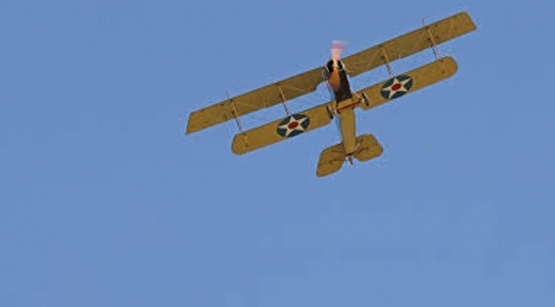
This is one of the editorials written by U.S. Army General Billy Mitchell (1879 – 1936) that only served to annoy the senior army leadership and their civilian overlords in Washington. On these pages General Mitchell made his case for the creation of a unique branch of the military confined entirely to air power that was distinct and independent of the Army. He points out that numerous armies are doing just this and the U.S. would be wise to do the same. He was particularly keen on seeing to it that everyone know that that the Imperial Japanese Army was doing the same thing.

An Ice Cream History (Coronet Magazine, 1951)
1951, Coronet Magazine, Food and Wine

An Ice Cream History
(Coronet Magazine, 1951)

In this admirable effort to briefly tell the history of ice cream, the authors of this three page narrative begin in the year 62 A.D., pointing out that the Roman Emperor Nero had gone on record declaring his fondness for frozen delicacies, but, as you will read, what he was consuming was in actuality something more along the lines of a snow-cone; but it is good to know that the market was very much in place at such an early moment in time. Jumping ahead some 1,200 years, we learn that Marco Polo had returned from China with a frozen tasty treat:

People tried it out, and something like our sherbet was soon served in many parts of Europe, eventually being improved upon by the addition of milk to resemble ice cream.


The trivia truly begins to flow from that point and we learn that George Washington was really quite fond of the stuff, and how ice cream sundaes and Eskimo Pies came into the world.


A refreshing read.

Advertisement

Food and Wine

Corn on the March
(Confederate Veteran Magazine, 1918)

Forty-three years after the bloody end of the American Civil War, this reminiscence by a Southern officer appeared in print recalling the important roll that corn played during those days as it had throughout all American history:

During the war I commanded the 1st Arkansas Regiment, consisting of twelve hundred men, and during the four years we never saw a piece of bread that contained a grain of wheat flower. We lived entirely on plain corn bread, and my men were strong and kept the best of health….

'Some of My Best Friends Are Jewish'' (Literary Digest, 1936)
1936, Jews in the 20th Century, The Literary Digest

‘Some of My Best Friends Are Jewish”
(Literary Digest, 1936)

Jews are like everybody else, only more so.’
So clicked the typewriter of the epigrammatic Dorthy Thompson (1893 – 1961), syndicated columnist and wife of Sinclair Lewis (1885 – 1951)’.

‘Are they?’ queried Robert Gessner (1913 – 1978), twenty-nine-year-old instructor of English at New York University. ‘Then why are they so persecuted?’

‘To answer his own question, the young Michigan-born Jew traveled to Europe, saw Hitler-swayed Jews march from meetings shouting ‘Down with us! Down with Us! Less fantastic were his experiences in Poland, Palestine, the Soviet Union and England…’

Advertisement

Looking Back at the War with Regret (The Nation, 1927)
1927, Aftermath (WWI), The Nation Magazine

Looking Back at the War with Regret
(The Nation, 1927)

Ten years ago the American people reversed its national tradition against entangling alliances and participation in the political struggles of Europe in order, as it is fondly believed, to make the world safe for democracy, safeguard the rights of small nations and the principle of self-determination… If the causes and justifications for our intervention were based on facts, some evidence of their truth ought now, after ten years, to be apparent.

Babe Ruth Ranks and his Peers (Literary Digest, 1929)
1929, Babe Ruth Articles, The Literary Digest

Babe Ruth Ranks and his Peers
(Literary Digest, 1929)

The ten best players that Babe Ruth can pick from the major leagues go into an unofficial diamond hall of fame. Ruth started picking these teams as a result of a clubhouse argument…

That there has been no prejudice is best shown, I think, by the fact that I have named six men from the National League and only one from my own league, the American…I haven’t named a single man from my own club, the New York Yankees, the men who play alongside me day after day through the season.

Did Stalin Want the U.S. to Recognize China? (Pathfinder Magazine, 1949)
1949, Pathfinder Magazine, The Cold War

Did Stalin Want the U.S. to Recognize China?
(Pathfinder Magazine, 1949)

Felix Morley (1894 – 1982), one of the senior Washington columnists in the early Cold War era, summarized the various concerns involved in the diplomatic recognition of Communist China as well as the surprising issue as to whether or not it was what the Soviet Premiere actually preferred at the time?

There is good reason to believe that the Communist high command in Moscow does not want us to recognize the new Communist government of China

But in recent years we have mixed up diplomatic recognition and moral approval. The absurd result is that we recognize Russia and not Spain, and are at present opposed to recognizing China even though we fear that may be cutting off our nose to spite Stalin’s face.

Advertisement

Scroll to Top