Author name: editor

Chemical War (The North American Review, 1922)
1922, Poison Gas, The North American Review

Chemical War
(The North American Review, 1922)

The article attached concerns the past and future of chemical warfare (at least as this was understood in 1922) and was written by Captain J.M. Scammell, Brit who wrote a good deal on the matter throughout much of the Twenties and Thirties. Like so many other articles we find from the immediate post-war period, Captain Scammell argued that chemical warfare can be one of the most humane options available to a general:

The really significant figures are those showing that while gas caused 27.3 percent of all casualties, of these only 1.87 percent died! That is less than one-twelfth the percentage that died from the effects of other wounds. Gas, moreover, does not mutilate or disfigure…

Sing Sing Prison: Home of the Bad New Yorkers (Click Magazine, 1938)
1938, Click Magazine, Old New York History, Recent Articles

Sing Sing Prison: Home of the Bad New Yorkers
(Click Magazine, 1938)

Sing Sing Prison was where the vulgar New Yorkers of the criminal variety spent much of their time:

Murderers and felons, rogues and embezzlers, an average of 2750 of them inhabit Sing Sing Prison at Ossining, N.Y. on the bank of the Hudson River. Theirs is a world apart. A world of gray stone walls and steel bars. When the gates clang shut behind them they enter upon a life scientifically regulated by Warden Lewis E. Lawes (1883 – 1947)…CLICK MAGAZINE takes you inside the grim walls and shows you what happens to the convicted criminal from the day he is committed to Sing Sing Prison until the day he leaves as a free man.

This is a photo-essay that is made up of twenty-five black and white pictures.

Read about the religious make up of Sing Sing Prison in the Thirties.

Where Glamour and Tennis Met: Nancy Chaffee (Quick Magazine, 1951)
1951, Quick Magazine, Recent Articles, Tennis History

Where Glamour and Tennis Met: Nancy Chaffee
(Quick Magazine, 1951)

This article is about Nancy Chaffee (1929 – 2002), another California-born tennis champion of the post-war era. Chaffee had once been ranked as the fourth-place women’s tennis champ in all the world, winning three consecutive national indoor championships (1950-1952). She first came to view in 1947 playing alongside the men on the U.S.C. tennis team (there was no women’s team at the time). The year before this article appeared on the newsstands, Chaffee made the semi-finals at Forrest Hills, her record at Wimbledon can be read here

Advertisement

John Byron Nelson: One Heck Of A Golfer (Yank Magazine, 1944)
1944, Golf History, Yank Magazine

John Byron Nelson: One Heck Of A Golfer
(Yank Magazine, 1944)

This short profile of Byron Nelson (1912 – 2006) was written when the golf champion was at the top of his game. Nelson was indeed one of the grand old masters of golf with many victories to his name (twelve PGA Tour wins). This article serves to illustrate how admired he was by his fellow players as well as his contemporaries who watched the game closely.


Click here to read about the first steel tennis racket.

A German Champion of American English (Literary Digest, 1908)
1908, American English, The Literary Digest

A German Champion of American English
(Literary Digest, 1908)

Having made a twenty year study of the English spoken in both Britain and the United States, Alois Brandl (1855 – 1940), chief Professor of English literature at the University of Berlin, found himself in an advantageous position that would allow him to make definitive conclusions about the evolution of the English language on American shores:

Mr. Brandl has been comparing English as it is spoken by Englishmen and English as it is spoken by Americans, and has come to the conclusion that the former is not a whit purer than the latter… the English of Americans was not only improving, but was already as good as that of our English cousins… He is very severe on the Cockney accent, and declares that the English of the ordinary educated American is quite on an equality with that of the ordinary educated Englishman…


Professor W.W. Skeat (1835 – 1912), chair of Anglo-Saxon Studies at Cambridge University, entirely agreed with the German savant and went on in greater detail along similar lines.

No mention was made as to what unit of measure was applied to reach their deductions.

The Institute for Reconstructive Plastic Surgery (Coronet Magazine, 1959)
1959, Coronet Magazine, Cosmetic Surgery

The Institute for Reconstructive Plastic Surgery
(Coronet Magazine, 1959)

During the course of the past 63 years the triumphs of The Institute of Reconstructive Plastic Surgery have been many and myriad. Established in New York in 1951, the organization was originally called The Society for the Rehabilitation of the Facially Disfigured, and they have been the pioneers in the art of tissue transplants and the aesthetic surgery movement in general.


The attached article was first seen on the pages of a 1959 issue CORONET MAGAZINE and it recalls many of their earliest achievements.

Advertisement

The Institute for Reconstructive Plastic Surgery (Coronet Magazine, 1959)
1959, Coronet Magazine, Cosmetic Surgery

The Institute for Reconstructive Plastic Surgery
(Coronet Magazine, 1959)

During the course of the past 63 years the triumphs of The Institute of Reconstructive Plastic Surgery have been many and myriad. Established in New York in 1951, the organization was originally called The Society for the Rehabilitation of the Facially Disfigured, and they have been the pioneers in the art of tissue transplants and the aesthetic surgery movement in general.


The attached article was first seen on the pages of a 1959 issue CORONET MAGAZINE and it recalls many of their earliest achievements.

Gowns (The Pathfinder Magazine, 1947)
1947, Pathfinder Magazine, Recent Articles, The New Look

Gowns
(The Pathfinder Magazine, 1947)

The fashionable gowns will be one of two extremes: pencil slim or big skirted like a puff ball. Whatever its cut, its color may be anything from soft dove grey to something called satan red. Fabrics are rich and lustrous, particularly the nontarnishable metallic materials. Newest is aluminum, colored gold or silver and woven into lame or onto rayon or even wool in gleaming designs.

Geraldine Farrar on Acting in the Silent Movies (Vanity Fair, 1921)
1921, Silent Movie History, Vanity Fair Magazine

Geraldine Farrar on Acting in the Silent Movies
(Vanity Fair, 1921)

In the attached article, Metropolitan Opera diva Geraldine Farrar (1882 – 1967) relays her experiences as a film actress in The Hell Cat (1918) and The Turn of the Wheel (1918), and boldly declares that there is a big difference between acting in an opera and acting for the screen (who knew?).

There are a hundred intimate expressions of the eyes, the mouth, the hands, that can only be transmitted through the camera, and the strong and sometimes merciless light of the projection machine. And this is what the motion picture actress must clearly and everlastingly keep in mind: she is acting for an audience which is near enough to detect any insincerity of feeling or any sham in make-up.

Click here to read about physical perfection during the Golden Age of Hollywood.

Advertisement

Advertisement

Poiret Wraps and Coats (Vogue Magazine, 1919)
1919, Fashion, Recent Articles, Vogue Magazine

Poiret Wraps and Coats
(Vogue Magazine, 1919)

By the time these images in American VOGUE hit the streets, the fashion house of Paul Poiret (1879 – 1944) was very much on the decline. Following the close of the First World War the designer was never able to regain his pre-1914 status. With the restlessness of the Twenties came the demand for a new mood in fashion and Coco Channel (1883 – 1971) became the new champion of Paris Fashion. Poiret closed his doors ten years after these photos were printed.


Read about the 1943 crochet revival

An Abbreviated War Record of the 92nd Division (The Stars and Stripes, 1919)
1919, African-Americans, The Stars and Stripes

An Abbreviated War Record of the 92nd Division
(The Stars and Stripes, 1919)

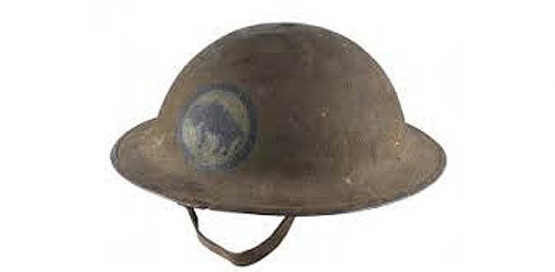
An illustration of the insignia patch and a brief account of the origins, deployments and war-time activities of the U.S. Army’s Ninety-Second Infantry Division during World War One. It is highly likely that the attached description of the 92nd’s service record had been rewritten to suit the personal taste’s of the paper’s Jim Crow editors. Sadly, there are other examples of such biased editing at THE STARS and STRIPES.

German Schools and the Teaching of the War (Literary Digest, 1922)
1922, Aftermath (WWI), The Literary Digest

German Schools and the Teaching of the War
(Literary Digest, 1922)

It was discovered in 1922 that when the German school system made mention of the recently ended war (if they addressed the topic at all), the subject was often white-washed or inaccurately characterized. When approached by a foreign reporter concerning the matter, teachers claimed that new books were too expensive and that the prevailing political forces could never agree on an accurate history of the war:

When do you think you will be able to begin studying the history of the war in your schools? I asked.

Not until this generation dies…

Advertisement

Clemenceau (Literary Digest, 1922)
1922, Aftermath (WWI), The Literary Digest

Clemenceau
(Literary Digest, 1922)

Georges Clemenceau (1841 – 1929) served as one of France’s wartime Premieres (1917-1920). The following is an excerpt from his letter to the American people imploring them to share in his outrage concerning Germany’s open defiance to the Versailles Treaty. Clemenceau would die seven years later, fully convinced that another devastating war with Germany was just around the corner.

Click here to read more articles about the German violations of the Versailles Treaty.

'The Plainsman'' by Cecil B. DeMille (Stage Magazine, 1937)
1937, Hollywood History, Recent Articles, Stage Magazine

‘The Plainsman” by Cecil B. DeMille
(Stage Magazine, 1937)

Why should a director risk it all with some anonymous film critic when a he is given the chance to review his own movie? With this thought in mind, Cecil B. DeMille (1883 – 1959) typed up his own thoughts concerning all his hard work on the 1937 film, The Plainsman, which starred Gary Cooper:

I think ‘The Plainsman’ differs from any Western we have ever seen for many reasons


– it is at this point in the article that DeMille rattles-off an extended laundry list
of reasons that illustrate the unique qualities of his Western. One of the unique aspects of the film mentioned only by publicists concerned the leading man Garry Cooper, who, being a skilled horseman from his Montana youth, chose to do most of his own riding stunts in the film, including the shot where he rode hanging between two horses.


Click here to read a 1927 review of Cecil B. De Mille’s silent film, King of Kings.

Advertisement

Scroll to Top