Author name: editor

Woman Aviator Seeks Mail Job (The Stars and Stripes, 1919)
1919, The Stars and Stripes, Women's Suffrage

Woman Aviator Seeks Mail Job
(The Stars and Stripes, 1919)

Katherine Stinson (1891-1977) wants to carry letters up to Third Army. By the time Stinson (a.k.a. the Flying Schoolgirl) had applied for the job of carying the mail to the occupying forces in post-war Germany, she already had the distinction of being the fourth American woman to earn a pilot’s license and the first woman to ever deliver air-mail for the U.S. Post Office. She didn’t get the job…

Advertisement

1915, Twentieth Century Writers, Vanity Fair Magazine

W.B. Yeats and Those He Has Influenced
(Vanity Fair,1915)

With the publishing of the first part of his autobiography, Reveries Over Childhood and Youth, W.B. Yeats (1865 – 1939) got some attention in the American press. Here is a small notice from an American society magazine which praises his ability as an artist to influence other writers, such as George Bernard Shaw, John M. Synge, George Moore and Dr. Douglas Hyde.

Poets in Their Glory: Dead (Literary Digest, 1917)
1917, Poetry, Recent Articles, The Literary Digest

Poets in Their Glory: Dead
(Literary Digest, 1917)

This 1917 article listed the known body count of dead poets who were rotting away in no-man’s land. A number of the scribes are unknown in our era; among the prominent names are Alan Seeger, Julian Grenfel and Rupert Brooke.


Printed in a popular U.S. magazine, it appeared on the newsstands the same week that Wilfred Owen, the most well known of World War I poets, was discharged from Craiglockhart Hospital, where he first resolved to write poetry about his experiences in the war.

VJ-Day in Pasadena (Yank Magazine, 1945)
1945, VJ Day, Yank Magazine

VJ-Day in Pasadena
(Yank Magazine, 1945)

A quick dispatch filed by YANK MAGAZINE correspondent Larry McManus from the pristine halls of a Pasadena military hospital (previously the Vista del Arroyo Hotel) where total bedlam broke out when the word was announced that the Japanese had cried uncle:

They went wild…they slid down banisters, they chinned themselves on the hospital’s chandeliers. The remark most of them made was, ‘No Pacific trip now!’

Advertisement

VJ-Day in Boston (Yank Magazine, 1945)
1945, Recent Articles, VJ Day, Yank Magazine

VJ-Day in Boston
(Yank Magazine, 1945)

Boston’s peace celebration exploded suddenly after the official news of Japanese surrender poured out of the countless radios. All morning and afternoon while many other cities were already wildly celebrating, the Hub, with true New England caution, waited soberly for confirmation.

But the staid attitude was swept away…The most general impulse seemed to be to shout, sing and hug passers-by. For men in uniform the celebration seemed to be more of a kissing fest than anything else…

VJ - Day in Berlin (yank Magazine, 1945)
1945, VJ Day, Yank Magazine

VJ – Day in Berlin
(yank Magazine, 1945)

The city that had seen its own brand of fascism and international banditry tumble only a few months before had little energy left for reaction to the fall of Japan. The American Forces network broadcast the first authentic VJ news at 0210, and most of Berlin’s polyglot occupation population, as well as most native Berliners, were asleep.

Advertisement

The Recycling of Doughboy Uniforms (Stars and Stripes, 1918)
1918, The Stars and Stripes, U.S. Army Uniforms of World War One

The Recycling of Doughboy Uniforms
(Stars and Stripes, 1918)

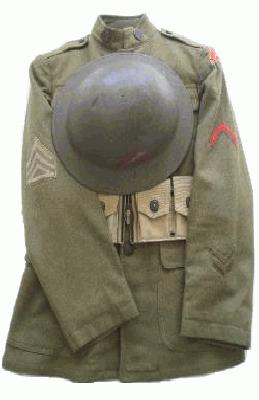
In 1918 the U.S. Army Service of Supply instituted a salvaging unit near the French city of Tours which employed hundreds of French women and a number of idle Sammies in order to eradicate Army waste. It was there that the millions of discarded uniform elements were re-fashioned into other useful items:

At Tours they evolved a hospital slipper with a sole made from a torn and discarded campaign hat and an upper of O.D cloth cut from anywhere. It was such a good slipper, and easy to make that St. Pierre-des-Corps soon reached quantity production on it.

Advertisement

The Navy Nurse Corps (Think Magazine, 1946)
1946, Think Magazine, Women (WWII)

The Navy Nurse Corps
(Think Magazine, 1946)

The attached story of U.S. Navy Nurse Corps and the brave and remarkable women who gallantly served within it’s ranks throughout the Second World War is told in this brief article. It documents the selfless service of Navy Nurses who stayed behind in the Philippines to face Japanese captivity rather than desert their patients.

That was typical of the steadfast manner in which Navy Nurses adhered to duty throughout the war, forsaking personal comfort and safety to bring the benefits of their skills to the sick and wounded.

Optimistic Plans Regarding the Use of Cavalry (The Alertmen, 1943)
1943, Recent Articles, The Alertmen, World War Two

Optimistic Plans Regarding the Use of Cavalry
(The Alertmen, 1943)

This illustrated article from an obscure U.S. Army weekly states quite clearly that in light of the successful use of cavalry on the Eastern Front, the U.S. Army was once again training men to fight on horse-back. Referring to the writings of a Soviet General named O.T. Gorodoviko (a probable reference to General O.T. Gorodovikov: 1879 -1960) who had stated in an article written in an undated issue of The Cavalry Journal, that cavalry proved effective in fighting the Nazis when deployed as mounted infantry in limited engagements. The journalist conveyed his enthusiasm that the era of the mounted man was back.

Please give us your thoughts about this article, something seems terribly fishy; did over-extended Soviet Generals have time to write for American journals? Furthermore, you might find that the accompanying photos seem deliberately out of date. The hard-charging post-debutants at OldMagazineArticles.com tend to feel that this article was a hoax intended to throw someone off the trail…

A Study of World War I American Army Officers (U.S. Government Archive, 1931)
1931, Doughboys, The U.S. Government Records

A Study of World War I American Army Officers
(U.S. Government Archive, 1931)

The attached pie chart will give you an understanding as to the history of the U.S. Army officer corps that served throughout the First World War. Drawn in 1931 and based upon the data collected by the Department of War, this study outlines the history of Army leadership between April of 1917 through November of 1918.


Click here to read a 1917 article about the U.S. Army officer training camp at Plattsburg, New York.

Advertisement

The U.S. Army Divisions and Their States of Origin (U.S. Government Archive, 1931)
1931, Doughboys, The U.S. Government Records

The U.S. Army Divisions and Their States of Origin
(U.S. Government Archive, 1931)

The attached file is composed of two informative paragraphs and a table listing the 42 American Army divisions, the states from which they were pooled and the locations of their respective training camps:

The Doughboys were trained in the division, which was our typical combat unit. In the American Army it was composed of about 1,000 officers and 27,000 men. Training and sorting organizations of about 10,000 men, known as depot brigades, were also utilized, but as far as possible, the new recruits were put almost immediately into the divisions which were the organizations in which they would go into action.

Click here to read about the efforts that were made to get free cigarettes to the Doughboys…

The First Automotive Brake Lights (Popular Mechanics, 1918)
1918, Cars, Popular Mechanics Magazine, Recent Articles

The First Automotive Brake Lights
(Popular Mechanics, 1918)

Many dented fenders later, the first signal indicators show up. This article makes clear that both the Brake light and the turning signal indicator are both the same color (red) but they are an improvement on what was sporadically used in a few circles: the Illuminated Glove (a fingerless mit intended for the left-hand that was supposedly easier to see when making stop or turning gestures).

Advertisement

Scroll to Top