Author name: editor

FDR WW II Price Controls | FDR WW II Economic Plans 1941
1941, Home Front, Newsweek Magazine, Recent Articles

New Deal Price Controls
(Newsweek Magazine, 1941)

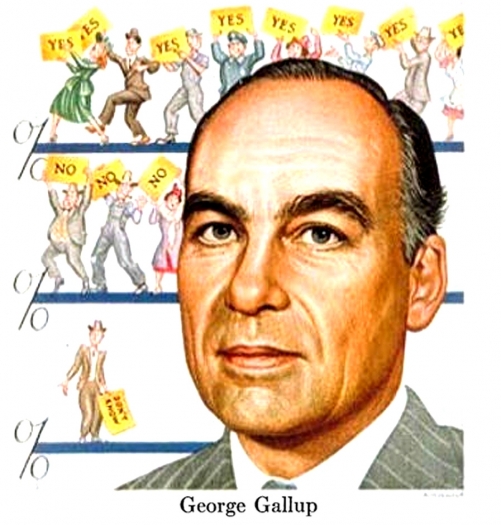
This article appeared six months before the 77th Congress passed a price control law as a wartime measure in an attempt to stave off inflation. The column pertains to the early planning of a wartime economy as the nation prepared to devote itself to total war. You’ll remember that the Supreme Court found FDR’s price control schemes (the NRA) to be unconstitutional during the Thirties. Regardless of their efforts, inflation still kicked-in after the war, up until the Republican Congress cut taxes.

Advertisement

High School Home Front Victory Corps Volunteers 1944
1944, Home Front, Recent Articles, See Magazine

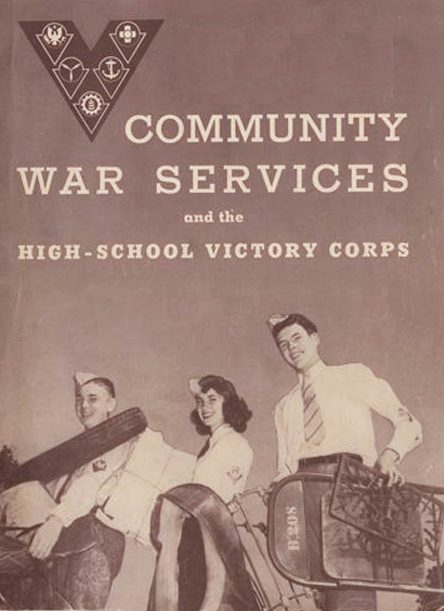
The Victory Corps
(See Magazine, 1944)

The Victory Corps was a voluntary program open to American high school
and college students during the Second World War. It was established in September of 1942 with an eye toward preparing teenagers for military service. Although its primary concern involved weapons training, physical fitness and mathematics, it also had a “farm volunteer” arm, as this article about one branch of the Sacramento Victory Corps makes clear.


More about youth and the war effort can be read here…

Advertisement

Life During the Blitz on Britain | Sculptor Clare Sheridan During WW II
1941, Battle of Britain, Collier's Magazine, Recent Articles

Life Under Siege
(Collier’s Magazine, 1941)

Here is an account of life during the Blitz, as written by sculptor Clare Sheridan (née Frewen; 1885 – 1970):


“I have from the very beginning put [poison] gas out of my thoughts and refused to carry a gas mask. But in a mad world growing madder daily who knows what the madmen may not resort to!… According to the gas booklet, the stuff will come through the window clacks, under the door and down the chimney.”

Advertisement

British War Labor 1941
1941, Battle of Britain, Collier's Magazine, Recent Articles

”Workingman’s War”
(Collier’s Magazine, 1941)

This 1941 Collier’s article looks at the British working class during the Blitz on London. Numerous men and women were interviewed concerning their aspirations and hopes for the post-war world. Much is written about the 300 free kitchens that were placed throughout London to accommodate them as well as the free schools that were instituted to train war plant workers how to use the various machines needed to create the necessary war materinél.


“Hitler isn’t making war against capitalism, as he says he is. He’s not the great proletarian he brags he is, but is instead deliberately bombing civilians, their schools, churches, homes and hospitals in order to throw the civilian population into despair and terror. Well, he has failed.”

NULL
1944, Battle of Britain, Recent Articles, Yank Magazine

”Buzz-Bombs Blitz”
(Yank Magazine, 1944)

Launched by air or from catapults posted on the Northern coast of France, the German V-1 “Buzz-Bomb” was first deployed against the people of London on June 12, 1944. Before the V-1 campaign was over 1,280 Britons would fall on greater London. 1,241 of these rockets were successfully destroyed in flight.

Accompanied by a diagram of the contraption, this is a brief article about London life during the “Buzz-Bomb Blitz”. Quoted at length are the Americans stationed in that city as well as the hardy Britons who had endured similar carnage during the Luftwaffe bombing campaigns earlier in the war.

1944, Recent Articles, See Magazine, Weapons and Inventions

Examining Axis War Material
(See Magazine, 1944)

This article tells of the U.S. Army Ordnance Corps and how they go about turning enemy weaponry inside-out in order to gain a full understanding of Axis capabilities:


“Every gun, from the smallest side-arm to largest howitzer, every tank, truck or other conveyance, every airplane and item of equipment abandoned by the retreating enemy, whether it be emergency ration or new type haversack falling into Allied hands, is carefully scrutinized for tell-tale clues to [the] foe’s tactics and resources.”

Advertisement

1944, Recent Articles, See Magazine, Weapons and Inventions

Examining Axis War Material
(See Magazine, 1944)

This article tells of the U.S. Army Ordnance Corps and how they go about turning enemy weaponry inside-out in order to gain a full understanding of Axis capabilities:


“Every gun, from the smallest side-arm to largest howitzer, every tank, truck or other conveyance, every airplane and item of equipment abandoned by the retreating enemy, whether it be emergency ration or new type haversack falling into Allied hands, is carefully scrutinized for tell-tale clues to [the] foe’s tactics and resources.”

1944, Recent Articles, See Magazine, Weapons and Inventions

Examining Axis War Material
(See Magazine, 1944)

This article tells of the U.S. Army Ordnance Corps and how they go about turning enemy weaponry inside-out in order to gain a full understanding of Axis capabilities:


“Every gun, from the smallest side-arm to largest howitzer, every tank, truck or other conveyance, every airplane and item of equipment abandoned by the retreating enemy, whether it be emergency ration or new type haversack falling into Allied hands, is carefully scrutinized for tell-tale clues to [the] foe’s tactics and resources.”

1944, Recent Articles, See Magazine, Weapons and Inventions

Examining Axis War Material
(See Magazine, 1944)

This article tells of the U.S. Army Ordnance Corps and how they go about turning enemy weaponry inside-out in order to gain a full understanding of Axis capabilities:


“Every gun, from the smallest side-arm to largest howitzer, every tank, truck or other conveyance, every airplane and item of equipment abandoned by the retreating enemy, whether it be emergency ration or new type haversack falling into Allied hands, is carefully scrutinized for tell-tale clues to [the] foe’s tactics and resources.”

Advertisement

Aberdeen Proving Ground 1944 |
1944, Recent Articles, See Magazine, Weapons and Inventions

Examining Axis War Material
(See Magazine, 1944)

This article tells of the U.S. Army Ordnance Corps and how they go about turning enemy weaponry inside-out in order to gain a full understanding of Axis capabilities:


“Every gun, from the smallest side-arm to largest howitzer, every tank, truck or other conveyance, every airplane and item of equipment abandoned by the retreating enemy, whether it be emergency ration or new type haversack falling into Allied hands, is carefully scrutinized for tell-tale clues to [the] foe’s tactics and resources.”

History of Scalping in America |
1961, First Nations, Recent Articles, Sir! Magazine

Scalping: An Anglo-Saxon Practice
(Sir! Magazine, 1961)

Congratulations: you found the goriest article on the site – it goes into some detail concerning the practice of scalping. The journalist insisted that the Mohawk leader Joseph Brant (né Thayendanegea, 1743 – 1807) imparted this historic fact to his family, who, throughout the centuries, have told it to anyone who would listen – the info he relayed to them was that scalping was an English import, not native to the Americas. The article goes on to explain that this was one of those cases in which the pupil far surpassed the teacher and proceeds to list all the many ways the native population had inflicted scalping upon all her various enemies throughout North America.

Expansion of American Military Power 1941 - 1944 | What Makes America So Powerful
1945, Aftermath (WWII), Liberty Magazine, Recent Articles

The American Leviathan
(Liberty Magazine, 1945)

Between the years 1941 and 1945 the United States achieved a level of power that the tyrants of yore only dreamed about:


“Clearly here was a phenomenon to make anyone sit up and take notice – a new kind of military machine, a new kind of global power that apparently could be delivered anywhere in the world, at any time… By building 75,000 to 100,000 planes yearly and by improving planes and motors, we have emerged suddenly as an air power…No other nation has made a comparable investment in carrier aviation. No other nation would dare to put an expeditionary force to sea against a nation strong in carriers and land -based aircraft…With the object of defending ourselves, we have solved one problem after another until we have stumbled on a formula for conquering most of the world.”


A similar article appeared twenty years earlier…

Advertisement

Scroll to Top