Author name: editor

The Pentagon Prepared for W.W. III (Pathfinder Magazine, 1951)
1951, Pathfinder Magazine, The Cold War

The Pentagon Prepared for W.W. III
(Pathfinder Magazine, 1951)

Shortly after the Soviet Union successfully tested their first atomic bomb, the brass hats who work in the Pentagon saw fit to take the first step in preparing to fight an atomic war: they gave the order to create a subterranean headquarters to house a military command and control center for the U.S. and her allies.

The finished chamber, according to local observers, will be 3,100 feet long, contain four suites for the top brass (the Joint Chiefs of Staff, among others), and provide operational quarters for some 1,200 technicians in peacetime, or 5,000 if atomic bombing threatens the Washington command.


Commonly known as Site R, it is located not terribly far from the presidential retreat, Camp David, and in the subsequent years since this article first appeared, the complex has grown considerably larger than when it was first envisioned. Today, Site R maintains more than thirty-eight military communications systems and it has been said that it was one of undisclosed locations that hosted Vice President Dick Cheney (b. 1941) shortly after the September 11th terrorist attacks.


A related article can be read here…

N.AT.O. Established (Dept. of the Army, 1956)
1956, The Cold War, The Dept. of the Army

N.AT.O. Established
(Dept. of the Army, 1956)

Attached is a printable page from an R.O.T.C. primer concerning American Military History outlined the events of 1948 that created the need for the North Atlantic Treaty Organization (N.A.T.O.).

This pact, called the North Atlantic Treaty, united Great Britain, the United States, and ten western European nations in a common security system. Approved by the Senate in April 1949, the treaty provided for mutual assistance, including the use of armed force in the event of a Soviet attack upon one or more of the signatory powers.

Advertisement

Cold War Politics and People of Color (Pageant Magazine, 1959)
1959, Pageant Magazine, Recent Articles, The Cold War

Cold War Politics and People of Color
(Pageant Magazine, 1959)

This well-illustrated article appeared in a middle class American magazine in 1959 and it reported on the rising international sentiments that signaled to the dominate Western powers that the old diplomacy of the wealthier white nations had to change. It will help to explain why the United States re-fashioned their immigration laws in 1965.


The Department of State hated it when Radio Moscow would depict Americans as simply a bunch of lynch-happy bigots…

Justice William O Douglas Cold War Editorial
1952, Quick Magazine, The Cold War

‘How We Can Win in Asia”
(Quick Magazine, 1952)

In the attached editorial, Supreme Court Justice William O. Douglas (1898 – 1980) weighs in on how the United States could forge stronger Cold War alliances in Asia and the Middle East:

We have thought that we could stop the spread of communism by guns and by dollars. We have spent billions upon billions and yet the Red tide of communism seems to spread… We should show Asia how her revolution can follow the pattern of 1776. What will win in Asia are not guns and dollars but but ideas of freedom and justice. To win in Asia, America must identify herself with those ideas.


To understand some of the diplomatic challenges Douglas was referring to, click here


More on this topic can be read here…

Martin Dies in the Cold War | Anti-Communist Martin Dies | Martin Dies Committee Chairman Un-American Activities Committee
1964, American Opinion, The Cold War

Russia’s Fifth Column in America
(American Opinion, 1964)

Over the last thirty years the United States, as well as Central and South America, has been invaded repeatedly by ununiformed soldiers of the Soviet Government – agents of the International Communist Conspiracy. Our government has been furnished repeatedly with conclusive evidence of this invasion and yet has done nothing to exclude and deport the invaders… To make matters worse, ‘Liberal’ administrations since the time of Franklin Roosevelt have urged that what few immigration restrictions we have to prevent their entrance be removed… Roosevelt was not interested in the fact that many of those entering were Communists; after all, he told me that some of his best friends were Communists.

Advertisement

The Damaged Prestige of the FBI (Quick Magazine, 1952)
1952, Quick Magazine, The Cold War

The Damaged Prestige of the FBI
(Quick Magazine, 1952)

When this article appeared on the newsstands, J. Edgar Hoover had been FBI chief for nearly thirty years. In all that time he had enjoyed being photographed among celebrities and adored patting himself on the back by writing numerous magazine articles about the FBI. But by the time the early Fifties came along Hoover and his Federal agency were no longer the teflon icon that they used to be; the failings of the FBI were adding up and Hoover did not seemed accountable.

The Coeds of the Cold War (Quick Magazine, 1953)
1953, Quick Magazine, The Cold War

The Coeds of the Cold War
(Quick Magazine, 1953)

The original Generation X was that group of babies born in the late Twenties/early Thirties: they were the younger brothers and sisters of the W.W. II generation. There seemed to have been some talk in the early Fifties that this group of Americans were becoming sardonic and cynical – raised on the W.W. II home front, only to find that when they came of age they were also expected to sacrifice their numbers in a foreign war:

How can you help being pessimistic when you hear that the boy you sat next to in high school English was killed last week in Korea?


– opined one of the nine college women interviewed on the attached pages. These Cold War women were asked what was on their minds as they prepared for jobs, marriage and family.

UN Peace Keepers history | Dean Acheson Advocate for UN Peace Keepers | UN Army History
1950, Pathfinder Magazine, The Cold War

Let The UN Keep The Peace
(Pathfinder Magazine, 1950)

In the fall of 1950, U.S. Secretary of State Dean Acheson stood before the United Nations General Assembly and reminded them that five years earlier, when the U.N. Charter was conceived, it was agreed that the U.N should have a military arm with which to enforce its edicts. He prodded their memories to a further degree when he reminded them that they’d have one today if the Soviet delegates hadn’t objected so vociferously.

Korea has shown how ill prepared the United Nations is to stop aggression. The defense of Korea is nominally a U.N. responsibility. But 98% of the effort, and an equally high percentage of the ‘United Nations’ casualties, come from the United States.

Advertisement

'What the Negro Means to America'' (Atlantic Monthly, 1929)
1929, African-American History, The Atlantic Monthly

‘What the Negro Means to America”
(Atlantic Monthly, 1929)

In the attached article Count Hermann Alexander Keyserling (1880 – 1946), German philosopher and social critic, wrote about those uncommon cultural elements within the African-American culture that renders American blacks as an unprecedented, unique cultural force in the world:

There has never been anything like the American Negro in Africa, nor is there anything like him in the West Indies or in South America.

African-Americans Who Live As Whites | Blacks who Pass as Whites| Crossing the Color Line 1949
1949, African-American History, Liberty Magazine

The Black Women Who Pass For White
(Liberty Magazine, 1949)

In most of our larger cities and many small towns there are thousands of Negroes who have successfully ‘gone over the line’ and are now living as white. Among them, it is said, are several well-known athletes and members of Congress – But you don’t hear much about the Negro women who pass. The roving male nature makes it easier for a man to pass completely, though it involves giving up his family as well as his friends. A woman finds passing harder to take.


Click here to read about the social differences between darker skinned and lighter skinned black people.

Advertisement

Mario Moreno: The Mexican Charlie Chaplin (Collier's Magazine, 1942)
1942, Collier's Magazine, Interviews: 1912 - 1960, Recent Articles

Mario Moreno: The Mexican Charlie Chaplin
(Collier’s Magazine, 1942)

A 1942 article about Mexican film comedian Mario Moreno (1911 – 1993) who was widely known and loved throughout Latin America and parts of the West as Cantinflas, the bumbling cargador character of his own creation. Born in the poorest circumstances Mexico could dish-out, Mario Moreno achieved glorious heights in the entertainment industry; by the time he assumed room temperature in the early Nineties he had appeared in well over fifty films.

Advertisement

In Memorium, 1914 (Saturday Review of Literature, 1929)
1929, The Saturday Review of Literature, Writing

In Memorium, 1914
(Saturday Review of Literature, 1929)

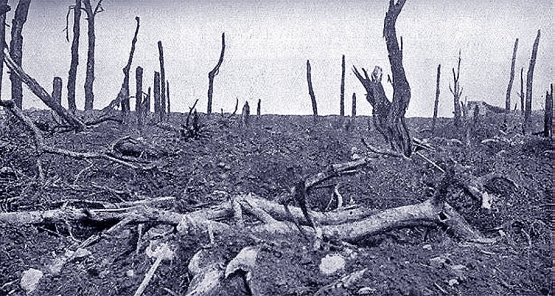
The editors for the August 3, 1929 issue of The Saturday Review of Literature removed their collective caps in deep solemnity for the disasters that began that week just fifteen years earlier when the opening shots were fired that began the First World War.


It was a fitting tribute coming from a literary magazine in 1929, for that would be the year that introduced some of the finest World War I books to the reading public: Undertones of War (Blunden), The Path of Glory (Blake) and All Quiet on the Western Front (Remarque), which are all mentioned herein.

'The Battle of the Somme'' by Philip Gibbs (Literary Digest, 1917)
1917, The Literary Digest, Writing

‘The Battle of the Somme” by Philip Gibbs
(Literary Digest, 1917)

This book review was published in an American magazine shortly after President Wilson and the U.S. Congress declared war on the Germany. The book in question, The battle of the Somme, was written by Philip Gibbs (1877 – 1962). Highly respected among his peers and the reading public, Gibbs was knighted for his efforts at the war’s end but soon he let the world know what he really thought of the war and, in particular, his feelings concerning General Douglas Haig.


Gibbs wrote a number of books that were critical of war, click here to read a review of More That Must Be Told (1921).

Advertisement

Scroll to Top