Author name: editor

bio of T.E. Lawrence of Arabia and all his doings in the desert
1930, The Saturday Review of Literature, Writing

T.E. Lawrence of Arabia
(Saturday Review of Literature, 1930)

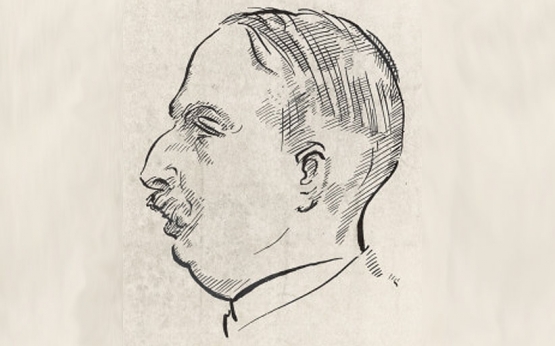
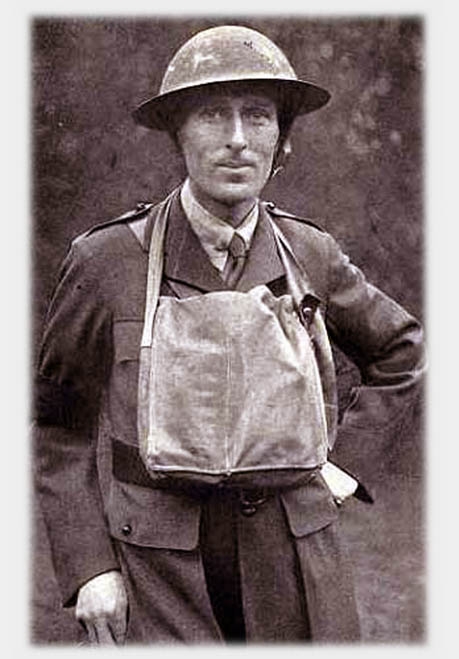
This is a 1930 review of of Gurney Slade’s fictionalized account of the World War One Arab revolt, In Lawrence’s Bodyguard. The book was intended as a novel for boys and is here reviewed anonymously by one who was simply credited as, A Friend of T.E. Lawrence. Gurney Slade (pen name for Stephen Bartlett) was libeled as a man of taste and sensibility and the novel was generally well liked.

‘The Arab business was a freak in my living; in ordinary times I’m plumb normal.’ Normal, yes; but only the normally strong arise to be normal after trial and error.

You might also like to read this 1933 article about T.E. Lawrence.

Click here to read about Lawrence’s posthumous memoir and the literary coup of 1935.

'Company K'' by William March (Saturday Review of Literature, 1933)
1933, The Saturday Review, Writing

‘Company K” by William March
(Saturday Review of Literature, 1933)

The New York Times war correspondent Arthur Ruhl (1876 – 1935) reviewed a book that would later be seen as a classic piece of World War One fiction: Company K
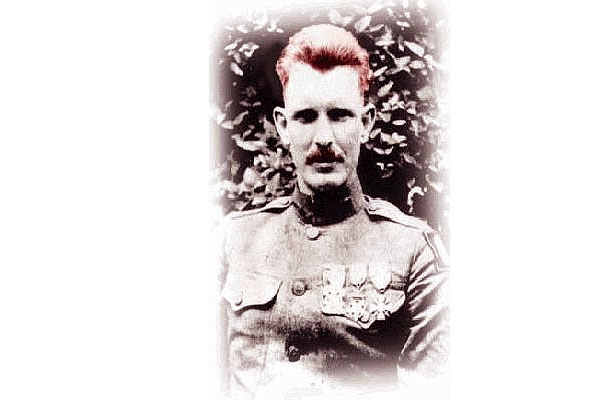
by William March (born William Edward Campbell 1893 – 1954). Awarded both the French Croix de Guerre and the Distinguished Service Cross, March gained an understanding of war and the frailties of human character as a member of the Fifth Marines fighting at Belleau Wood and participating in the big push during the San-Mihiel Offensive:

The outstanding virtues of William March’s work are those of complete absence of sentimentality and routine romanticism, of a dramatic gift constantly heightened and sharpened by eloquence of understatement.

No More Parades' by Ford Madox Ford (Literary Digest, 1926)
1926, The Literary Digest, Writing

No More Parades’ by Ford Madox Ford
(Literary Digest, 1926)

The attached article is a 1926 review of Ford Madox Ford’s (1873 – 1939) novel, No More Parades, his second in a series of four related novels concerning the Great War. Billed as the most highly praised novel of the year, the reviewer lapses into superlatives and exults:

Not since Three Soldiers has a novel of the war made such an impression on reviewers as Ford Madox Ford’s No More Parades… All our ‘intellectuals’ are reading it…our young intellectual novelists will be heavily influenced by it or will attempt to imitate a whole-cloth imitation of it.


Ford was a veteran of the war who served with the Royal Welsh Fusiliers; the article is illustrated with a black and white photo of the author standing shoulder to shoulder with Ezra Pound and James Joyce.

Advertisement

WW I Correspondent | WW I Reporter | War Correspondent Frederick Palmer
1921, Current Opinion Magazine, Writing

Another War Correspondent Remembers With Anger
(Current Opinion, 1921)

American journalist Frederick Palmer (1873 – 1958) began his career as a correspondent covering the Greco-Turkish War (1896 – 1897); by the time the First World War flared up his stock was at it’s very peak and and was selected by the British Government to serve as the sole American reporter to cover the efforts of the B.E.F.. In the Spring of 1917, when the U.S. entered the war, Palmer was recruited by the American Army to serve as the press liaison officer for General Pershing. A good deal of Palmer’s experiences can be gleaned from this article, which was written as a review of his wartime memoirs, The Folly of Nations (1921).


Another Frederick Palmer article can be read here…

WW I Correspondent | WW I Reporter | War Correspondent Frederick Palmer
1921, Current Opinion Magazine, Writing

Another War Correspondent Remembers With Anger
(Current Opinion, 1921)

American journalist Frederick Palmer (1873 – 1958) began his career as a correspondent covering the Greco-Turkish War (1896 – 1897); by the time the First World War flared up his stock was at it’s very peak and and was selected by the British Government to serve as the sole American reporter to cover the efforts of the B.E.F.. In the Spring of 1917, when the U.S. entered the war, Palmer was recruited by the American Army to serve as the press liaison officer for General Pershing. A good deal of Palmer’s experiences can be gleaned from this article, which was written as a review of his wartime memoirs, The Folly of Nations (1921).


Another Frederick Palmer article can be read here…

Advertisement

A War Correspondent Remembers With Anger (Current Opinion, 1922)
1927, Current Opinion Magazine, Writing

A War Correspondent Remembers With Anger
(Current Opinion, 1922)

A single paragraph review of Sir Philip Gibbs’ (1877 – 1962) book, More That Must Be Told. The book was written as a sequel to his previous volume which cataloged the many blunders and assorted outrages of the Great War, Now It Can Be Told (1920). The reviewer wrote:


Click here to read about the new rules for warfare that were written as a result of the First World War – none of them pertain to the use of poison gas or submarines.

Baron Fritz & No Hard Feelings (Saturday Review of Literature, 1930)
1930, The Saturday Review, Writing

Baron Fritz & No Hard Feelings
(Saturday Review of Literature, 1930)

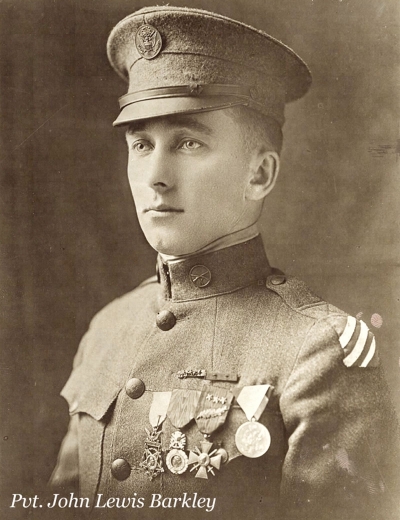
Saturday Review’s Emerson G. Taylor reviewed two World War I books: Baron Fritz by Dante scholar Karl Federn, which he liked, and No Hard Feelings, by Medal of Honor recipient John Lewis Barkley, which he did not:


In this week’s other narrative of soldier’s life, John Lewis Barkley, late Corporal, K Company, 4th United States Infantry, tells the world that he and his gang were exceedingly tough ‘hombres’, that, in the Second Battle of the Marne and in the Meuse Argonne operations, he killed a vast number of bloodthirsty Germans with his trusty rifle, by serving a machine-gun, or with a pistol and a knife, that he was profusely decorated, was always in the fore-front of duty and danger, and spent a furlough in Paris with Marie…Ho-hum.

Advertisement

Ludendorff's Apology (The Nation, 1920)
1920, The Nation Magazine, Writing

Ludendorff’s Apology
(The Nation, 1920)

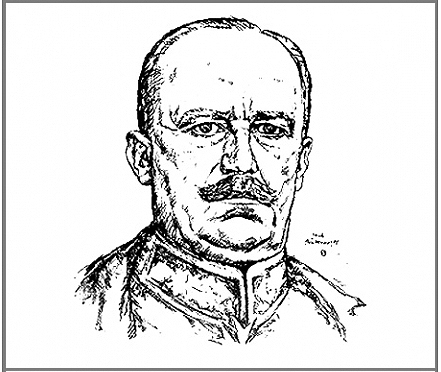
A second and far more thorough book review of My Story, by German General Erich von Ludendorff (1865 – 1937).

When the bitterness of these days has passed, historians will very likely classify Ludendorff as first among the military geniuses of his time. But his ‘own story’ will have importance principally because of certain sidelights it casts upon his motives and psychology.


A shorter review of Ludendorff’s memoir can be read here.


Read about Ludendorff’s collusion with Hitler…

General Von Ludendorff Defends Himself (The Dial Magazine, 1920)
1920, The Dial Magazine, Writing

General Von Ludendorff Defends Himself
(The Dial Magazine, 1920)

Attached is a review of Von Ludendorff’s memoir entitled My Own Story as it appeared in a much admired journal of the arts.

‘Ludendorff’s Own Story’ by Erich Friedrich Von Ludendorff gives a G.H.Q. view of the war from August 1914 to November 1918. It has a certain quality of forthrightness which makes its fallacies and mistakes apparent to the reader even when they escape the author. Ludendorff’s thesis is that the war was lost because the the army at home had not another Ludendorff to direct it…


In 1920 the representatives from the victorious nations who convened at Versailles demanded that Kaiser Wilhelm, General Ludendorff and an assortment of various other big shots be handed over for trial – click here to read about it.


A longer review of Ludendorff’s memoir from The Nation can be read here.

Click here to read about Ludendorff’s association with Hitler.

Advertisement

A Review of Grand Admiral Von Tirpitz Memoir (The Dial Magazine, 1920)
1920, The Dial Magazine, Writing

A Review of Grand Admiral Von Tirpitz Memoir
(The Dial Magazine, 1920)

The well respected arts journal, THE DIAL, published a very brief notice reviewing the post-war memoir, My Memoirs, by Admiral Alfred Von Tirpitz (1849-1930). The Dial reviewer found the Von Tirpitz’ memoir interesting as a psychological study:

My Memoirs, by Grand Admiral von Tirpitz is one of those elaborate vindications which carry the authentic conviction of guilt…If Germany was really, as the Grand Admiral estimates, a sheep in wolf’s clothing, a few more memoirs like this will leave no regret about her fate.


Read an article about the many faults of the German Navy during the Second World War…

Advertisement

Recalling Two of the War's Blunders (The English Review, 1920)
1920, The English Review, Writing

Recalling Two of the War’s Blunders
(The English Review, 1920)

Added to the growing pile of reviews that attempted to sort out all the various explanations as to why the war went so badly for practically all the nations involved was this 1920 article that presented a clear description of the 1914 drive on Paris as well as the disaster that was the Gallipoli campaign.


The books reviewed were penned by two of the war’s principal players: The March on Paris by General Alexander Von Kluck (1846-1934) and Gallipoli Diary by General Sir Ian Hamilton (1853-1957).


The story of the German onrush and it’s memorable check can now be pieced together with accuracy. It tallies with the account of General Sir Frederick Maurice. We now know that the Germans failed through want of General Staff control, through inadequate intelligence, above all, through striking at two fronts at the same time.

US 165th Infantry Regiment in WW I | AEF Battle of the Ourcq River 1918 | AEF Attack on Kriemhilde Stellung 1918
1920, The Home Sector, Writing

‘Father Duffy Tells What Happened”
(The Home Sector, 1920)

In this article, the famous chaplain of the 165th Infantry (formerly the NY Fighting 69th) Father Francis Duffy (1874 – 1932) describes how the regiment was ripped to shreds in two offensives – hinting all the while that somebody blundered:

Since 1915 no commanders in the older armies would dream of opposing too strongly wired and entrenched positions [with] the naked breast of their infantry. They take care that the wire, or part of it at least, is knocked down by artillery or laid flat by tanks before they ask unprotected riflemen to [breach the line]. When the wire is deep and still intact and strongly defended, the infantry can do little but hang their bodies upon it.


More about Father Duffy can be read here…

Advertisement

Scroll to Top