Author name: editor

'A Brass Hat in No Man's Land'' - Reviewed by Robert Graves (Now & Then, 1930)
1930, Writing

‘A Brass Hat in No Man’s Land” – Reviewed by Robert Graves
(Now & Then, 1930)

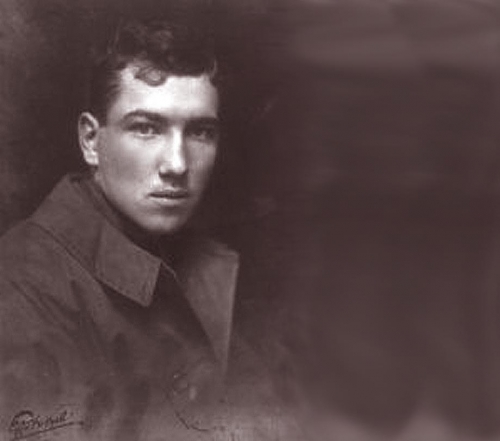
War poet Robert Graves was assigned the task of reviewing the W.W. I memoir A Brass Hat in No Man’s Land
by the English General F.P. Crozier and came away liking it very much: It is the only account of fighting on the Western Front that I have been able to read with sustained interest and respect. Crozier’s memoir did not spare the reader any details involving the nastier side of the war; he reported on trench suicides, self-inflicted wounds and mutinies:

My experience of war, which is a prolonged one, is that anything may happen in it from the highest kinds of chivalry and sacrifice to the very lowest forms of barbaric debasement.


Click here to read the 1918 interview with General Hindenburg in which he declared that the Germans lost the war as a result of the American Army.
Memoirs of a Fox-Hunting Man (The Bookman, 1929)
1929, The Bookman, Writing

Memoirs of a Fox-Hunting Man
(The Bookman, 1929)

Heartlessly torn from the brittle pages of a 1929 issue of The Bookman was this summary and review of Memoirs of a Fox-Hunting Man by Sigfried Sassoon:

During the war something was lost to Englishmen which they can recapture in nostalgic memories but never recover in fact. This strange novel of Sassoon’s reminds one of the faintly faded colors and old-fashioned security of English sporting prints.

Siegfried Sassoon on the Soldier Poets (Vanity Fair, 1920)
1920, Recent Articles, Vanity Fair Magazine, Writing

Siegfried Sassoon on the Soldier Poets
(Vanity Fair, 1920)

The following five page article was written by the World War I poet, Siegfried Sassoon (1886-1967), in an

attempt to give a rough outline of what the British poets did in the Great War, making every allowance for the fact that they were writing under great difficulty….


Sassoon gave a thorough going-over of every war poet that he admired, naming at least twenty. It is a wonderful and revealing read for all those who have come to admire the poets of the First World War and Sigfried Sassoon in particular.


Click here to read additional articles about W.W. I poetry.

Advertisement

Arsenal of Democracy Displaces the great depression | Freeport Texas 1940
1940, Collier's Magazine, Recent Articles, The Great Depression

Prosperity Returns to Freeport, Texas
(Collier’s Magazine, 1940)

In 1940, when a defense plant moved into the Gulfport town of Freeport, Texas, the Great Depression came to a screeching halt. Within three months their population shot up from 3,100 to a whopping 7,500, and the economic blessing was not simply confined to that one region:

In Corpus Christi they have a nice little plum in the form of a $25,000,000 naval air base. Houston is getting a $2,000,000 refurbishing of Ellington Field. Randolph Field at San Antonio is getting a costly going over.


Life in Freeport was good. When a local shoeshine lad had found that his pockets were flush with cash after three day’s labor, he exclaimed –

We’re in high cotton now!

Article by Reverend Daniel A Poling | Dr Daniel Poling editor of the Protestant Christian Herald
1950, Faith, Pageant Magazine, Recent Articles

The Dying Soldier
(Pageant Magazine, 1950)

In this article, Reverend Daniel A. Poling (1884 – 1968), editor of the Christian Herald (Protestant) recalled his visit to the bedside of a dying American soldier in the war-ravaged France of 1944. The young man, a believer in Christ, expressed his undigested views of what lay before him in the afterlife. The author shared his understanding on the topic and found that they weren’t at all dissimilar.

Fritz Thyssen Confession 1940 | Fritz Thyssen Turned On Hitler 1939 | Fritz Thyssen Rejected Nazism 1939
1940, Adolf Hitler, Recent Articles, The American Magazine

‘I Backed Hitler”
(American Magazine, 1940)

German millionaire industrialist Fritz Thyssen (1873 – 1951) paid the way for the Nazi party from its earliest days all the way up to Hitler’s place in the sun. When Hitler attacked Poland, Thyssen bailed. In this column he confesses all:

I met Hitler for the first time in 1923… Ludendorf arranged my first meeting with Hitler at the home of a mutual friend. What a different character Hitler was then! He was deferential and anxious to learn. You may not believe me, but he had a sense of humor, actually telling many jokes… Hitler as a speaker was amazing. I asked him how he achieved such success addressing people. He said, ‘I don’t know, but after ten minutes, like a band leader, I usually make contact with the crowd, and then everything is all right.’

Advertisement

Happy Days Are Here Again! (Pageant Magazine, 1959)
1959, Pageant Magazine, Recent Articles, Repeal

Happy Days Are Here Again!
(Pageant Magazine, 1959)

In 1959 an eyewitness to American Prohibition recalled the unbridled glee that spread throughout the land when the Noble Experiment called it quits (December 5, 1933):

The legal celebrations that were held on the first night of repeal were mostly in keeping with the wet organizations’ desire to show that this was an historic moment far more important for the freedom of choice it restored to the public. In New Orleans cannons were shot off, whistles blown and city-wide parades held to greet repeal. Boston bars, permitted by lenient local authorities to stock up with legal booze into the night, were so packed by ten o’clock that a latecomer was lucky to get inside the doors, much less get a drink. The next day there were long lines of 100 and more people in front of liquor stores from early morning until closing…

All Quiet on the Western Front (Saturday Review of Literature, 1929)
1929, The Saturday Review of Literature, Writing

All Quiet on the Western Front
(Saturday Review of Literature, 1929)

Henry Seidel Canby (1878 – 1961) was one of the founding editors of The Saturday of Literature
and in this article he put pen to paper and presented his readers with a concise summation of what he liked to call the five phases of war literature. Canby sensed that since 1919 there had been five unique types of war books, all produced by veterans, and that Erich Maria Remarque’s (1898 – 1970) All Quiet on the Western Front was typical of the fifth variety that was appearing in 1929:

The balance hangs true in Remarque. Pacifism is a theory, militarism is a theory, war is a necessity – not in its causes, for who really hates the enemy! – but for this doomed generation it is a fact. War for these men is normal, which does not mean that they like it.


A 1930 article about the movie can be read herecan be read here.

CARRY ON by Coningsby Dawson (NY Times, 1917)
1917, The New York Times, Writing

CARRY ON by Coningsby Dawson
(NY Times, 1917)

Attached, you will find the 1917 review of Carry On
by Coningsby Dawson (1883 – 1959). The book is a collection of the author’s beautifully crafted letters that were written to his family while he served on the Western Front during the First World War. Dawson’s ability to convey the urgency of the allied cause was so well received he was assigned to write two additional books by the British Ministry of Information: The Glory of the Trenches and Out to Win, both published in 1918 (neither of the two were any where near as moving as the one that is reviewed here).


Click here to read about W.W. I art.

Advertisement

The Enormous Room by E.E. Cummings (Life Magazine, 1922)
1922, Life Magazine, Writing

The Enormous Room by E.E. Cummings
(Life Magazine, 1922)

This is a short, pithy review of E.E. Cummings’ (1894 – 1962) novel, The Enormous Room I1922), which was based upon his experience as an American volunteer ambulance driver and his subsequent incarceration in a French jail for having admitted to pacifist sympathies. The reviewer believed that the book provided:

the last word in realistically detailed horrors.


F. Scott Fitzgerald is said to have remarked:


Of all the work by young men who have sprung up since 1920 one book survives – The Enormous Room by E.E. Cummings.

'Men in War'' by Andreas Latzko (Current Opinion, 1918)
1918, Current Opinion Magazine, Writing

‘Men in War” by Andreas Latzko
(Current Opinion, 1918)

In the bad-old days of World War I, author Andreas Latzko (1876 – 1943) served as a line officer in the Austro-Hungarian Army. While at the front he was affected by the horrors of combat until he found that he had seen enough and chose to desert. Even before the war had ended he managed to create an anti-war novel and get it to press before the Armistice. Digitized here is the 1918 review of his book, Men In War

Disillusionment and an almost morbid sympathy with mental and physical suffering are outstanding features of the book.

Advertisement

Israel Zangwill and the Great War (The North American Review, 1916)
1916, The North American Review, Writing

Israel Zangwill and the Great War
(The North American Review, 1916)

Israel Zangwill (1864 – 1926) was a member of the Jewish literary society in Britain; he was an prominent lecturer, journalist, novelist and playwright. Today, however, he is mostly remembered for his efforts on behalf of the Zionist movement to establish a Jewish homeland. The following is a luke-warm book review from 1916 covering his collection of essays about World War I, The War for the Worldstyle=border:none.

The Victory Parade Down Pennsylvania Avenue (Literary Digest, 1919)
1919, Civil War History, Recent Articles, The Literary Digest

The Victory Parade Down Pennsylvania Avenue
(Literary Digest, 1919)

Here is a reminiscence of the grand parade following the close of America’s bloody Civil War. It took two days; with the Army of the Potomac marching on the first day followed by General Sherman’s Army of the West on the next. The Grand Review was the brain-child of Secretary of War, Edwin M. Stanton and was attended by (so it was believed) over one hundred thousand people from the victorious Northern states.


From Amazon: Marching Home: Union Veterans and Their Unending Civil Warstyle=border:none

Advertisement

Golf Goes Yankee (Vanity Fair Magazine, 1922)
1922, Golf History, Recent Articles, Vanity Fair Magazine

Golf Goes Yankee
(Vanity Fair Magazine, 1922)

The attached golf article first appeared in a 1922 Vanity Fair titled The Royal and Ancient Game. Penned by golf legend Charles Chick Evans, Jr. (1890 – 1979) it traces the birth of the game and its migration across the sea where the game was heartily welcomed:

Golf seemed a gift from an high. Across the water it came and our best people took it up. They had discovered it in their travels abroad. It is true that poor people played it in Britain, but it seemed very sure that they would not do so in America…


Click here to read about the American cars of 1922.

Victorian Fashion vs Flapper Fashion
1929, Fashion, Recent Articles, The Literary Digest

Turning Back The Fashion Revolution
(Literary Digest, 1929)

Periodically we run across articles on this subject and it makes us sit up and recognize that this must have been a constant fear for numerous women (and fashion journalists) during the Twenties. Each article centers on a widespread belief that the Deep State behind the fashion industry had plans afoot to force women back into long skirts and corsets and that women would not be allowed any say in the matter.


Click here to read a similar article and here to read our other article on the subject.

Advertisement

Scroll to Top