Author name: editor

1942, Liberty Magazine, Recent Articles, WACs

Fort Des Moines
(Liberty Magazine, 1942)

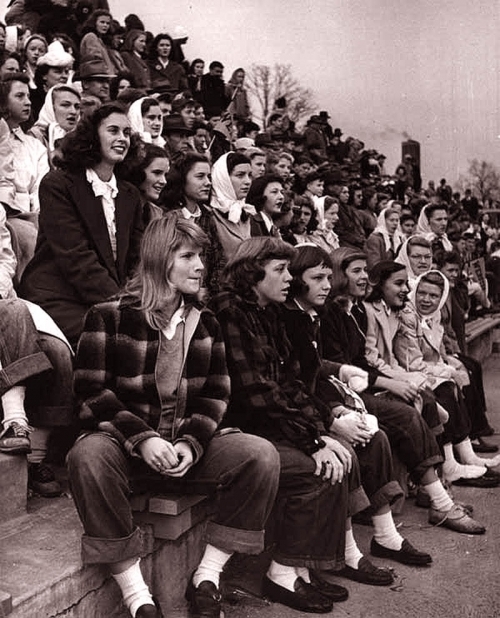
“When recruits in the new Women’s Army Auxiliary Corps – commonly dubbed WAACS – reported for training at Fort Des Moines, Iowa, women for the first time in American history became members of Uncle Sam’s Army.”


(The title concerning “the first woman in the Uncle Sam’s Army” is believed to go to a lass named Deborah Sampson who served in George Washington’s army in 1781, under the name “Robert Shurtliff”.)

1942, Liberty Magazine, Recent Articles, WACs

Fort Des Moines
(Liberty Magazine, 1942)

“When recruits in the new Women’s Army Auxiliary Corps – commonly dubbed WAACS – reported for training at Fort Des Moines, Iowa, women for the first time in American history became members of Uncle Sam’s Army.”


(The title concerning “the first woman in the Uncle Sam’s Army” is believed to go to a lass named Deborah Sampson who served in George Washington’s army in 1781, under the name “Robert Shurtliff”.)
Fort De Moines Iowa 1942 | WAACs at Fort De Moines 1942
1942, Liberty Magazine, Recent Articles, WACs

Fort Des Moines
(Liberty Magazine, 1942)

“When recruits in the new Women’s Army Auxiliary Corps – commonly dubbed WAACS – reported for training at Fort Des Moines, Iowa, women for the first time in American history became members of Uncle Sam’s Army.”


(The title concerning “the first woman in the Uncle Sam’s Army” is believed to go to a lass named Deborah Sampson who served in George Washington’s army in 1781, under the name “Robert Shurtliff”.)
Advertisement

Advertisement

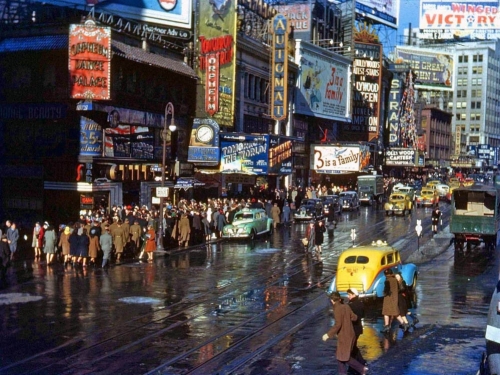
German Refugee Photographer Herbert Sonnenfeld in NYC
1942, Americana, Liberty Magazine, Recent Articles

A Refugee Looks at America
(Liberty Magazine, 1942)

Photographer Herbert Sonnenfeld (1906 – 1972) was able to escape from his native Germany in the winter of 1939, shortly after the Second World war had just begun. After the initiation of the Nuremburg Laws four years earlier, life for him and his fellow Jews had taken a terrible turn for the worse and he was delighted to be able to depart for New York. The attached photo-essay and the accompanying captions reveal his joy and elation for living in a land of plenty, far away from the Nazi boot.

Separation of Church and State Magazine Article | Anti-church Sentiment in 1960s America
1963, Christian Herald, Faith, Recent Articles

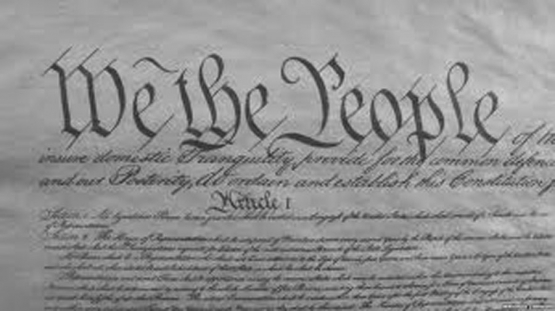
”The Separation of God and State”
(Christian Herald, 1963)

The attached article by Joseph Martin Hopkins, was most likely written in response to the 1962 Supreme Court decision in Engel v. Vitale. This decision stated that it is unconstitutional for state officials to compose an official school prayer and encourage its recitation in government schools. Hopkins had this to say:


“Is this what the Founding Fathers intended? It has been well stated that to the contrary, their concern was that the American people enjoy freedom of religion, not freedom from religion.”

Advertisement

U.S. Defense Industry in 1941
1930s Military Buildup, 1941, Newsweek Magazine, Recent Articles

The Arsenal of Democracy Kicks-In
(Newsweek Magazine, 1941)

Sitting before a senate committee, FDR’s Secretary of War Henry L. Stimson (1867 – 1950) warned the country that the United States will have a time trying to catch-up with the Germans, who have been producing armaments since 1933. Whether our factories are making weaponry for the Allies alone, or whether we enter the war and have to make ordinance for us and the Allies – a challenge has presented itself.

Japan's Sorry War Industry 1943
1943, American Legion Magazine, Recent Articles, World War Two

Japan’s Industrial Shortcomings
(American Legion Magazine, 1943)

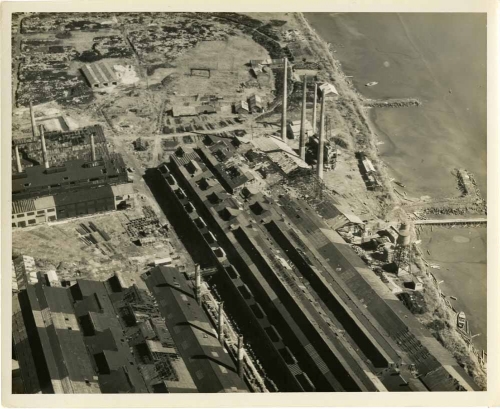
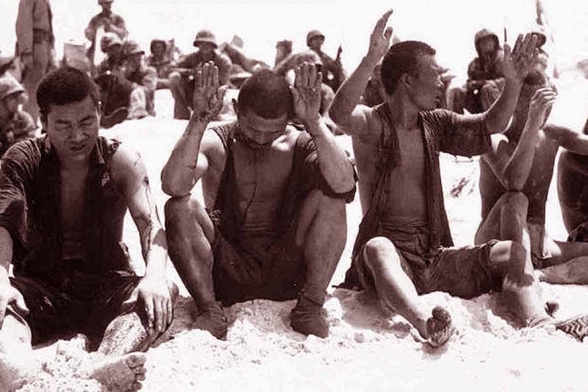
This article said nothing to the American home front readers that they didn’t already know, in fact the Associated Press ran a similar article that appeared on numerous front pages on December 8th of 1941. Simply stated, it reported that the Japanese were totally incapable of maintaining prominence in a war against the United States due to the fact that Japan’s war industry was far too small and they had few natural resources to rely upon. The reason that the subject was broached again in early 1943 was because it was all beginning to appear quite true. During the first 13 months of the war the Japanese let loose with everything they had, now they were on the defensive, and discovering that their industry was woefully inadequate.


Articles about the significance of 1943 can be read here can be read here and here…

Advertisement

1939, American Legion Magazine, Recent Articles, World War One

”Never Again”
(American Legion Magazine, 1939)

In the attached article, an American journalist ruminated about the U.S. experience in W.W. I on the eve of W.W. II. All told, he didn’t think intervention was a good idea but was grateful America learned its lesson.


“Suffice it here to record the unquestioned fact that American determination which was enthusiastic at the outset became more and more grim as reality replaced imagination.”

Advertisement

Regretting American Intervention in WW I | WW1 as Unpopular War at Home
1939, American Legion Magazine, Recent Articles, World War One

”Never Again”
(American Legion Magazine, 1939)

In the attached article, an American journalist ruminated about the U.S. experience in W.W. I on the eve of W.W. II. All told, he didn’t think intervention was a good idea but was grateful America learned its lesson.


“Suffice it here to record the unquestioned fact that American determination which was enthusiastic at the outset became more and more grim as reality replaced imagination.”

NULL
1943, American Legion Magazine, Recent Articles, World War Two

1943: The Year the Japanese Had Shot Their Wad
(American Legion Magazine, 1943)

“Japan in the first 13 months of war let loose virtually everything she had against us. Now she’s feeling the pinch, for her lack of industrial capacity makes replacements slow, and she hasn’t the savvy to keep up with her opponents in improving plants and weapons. This is particularly true in the all-important matter of aircraft.”

Racial Segregation at New Lincoln Junior High School 1943 | Racism in New Jersey 1943
1943, African-American History, PM Tabloid, Recent Articles

Jim Crow in Trenton
(PM Tabloid, 1943)

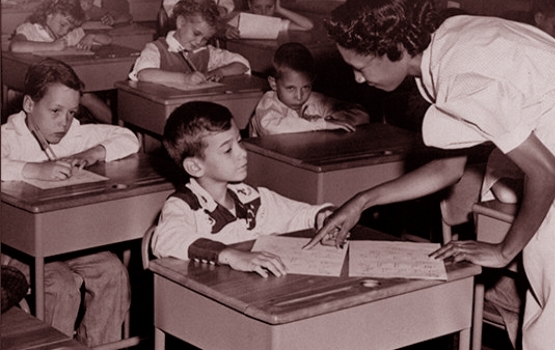
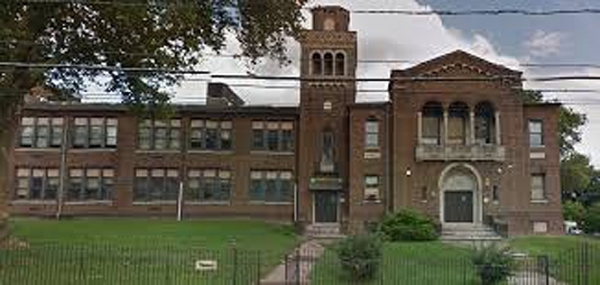
In 1943 the NAACP asked the administrators at Trenton’s New Lincoln Junior High School to explain why it should be entirely reserved for only Black students when such a practice was in violation of the State Civil rights Act.
The bureaucrats responded that ever since the school was built in the Twenties, that’s the way it had always been. Integration soon started.

Advertisement

Scroll to Top