Author name: editor

German Refugee Photographer Herbert Sonnenfeld in NYC
1942, Americana, Liberty Magazine, Recent Articles

A Refugee Looks at America
(Liberty Magazine, 1942)

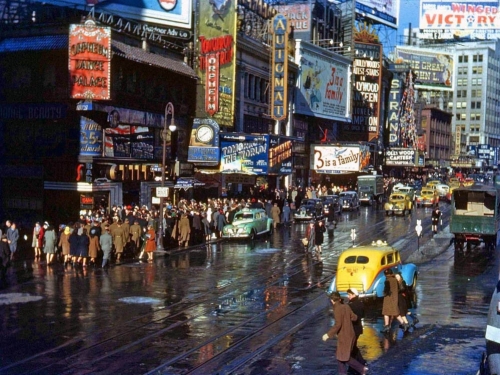
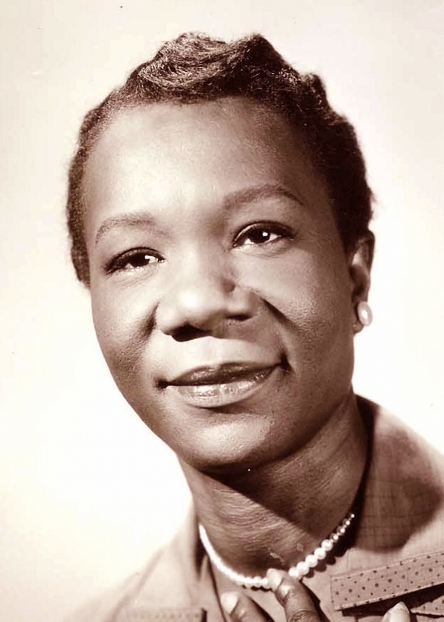
Photographer Herbert Sonnenfeld (1906 – 1972) was able to escape from his native Germany in the winter of 1939, shortly after the Second World war had just begun. After the initiation of the Nuremburg Laws four years earlier, life for him and his fellow Jews had taken a terrible turn for the worse and he was delighted to be able to depart for New York. The attached photo-essay and the accompanying captions reveal his joy and elation for living in a land of plenty, far away from the Nazi boot.

Advertisement

Use shortcode [oma_ad position="summary_top"] (or other position) in your theme or widgets to display OMA Promotions here.

Separation of Church and State Magazine Article | Anti-church Sentiment in 1960s America
1963, Christian Herald, Faith, Recent Articles

”The Separation of God and State”
(Christian Herald, 1963)

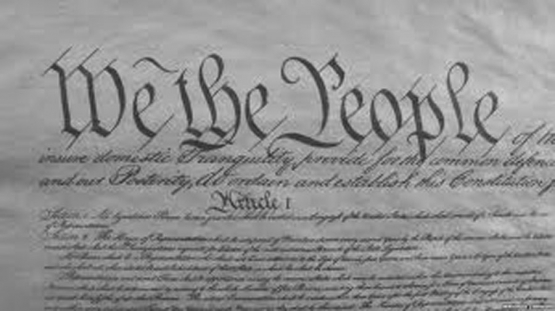
The attached article by Joseph Martin Hopkins, was most likely written in response to the 1962 Supreme Court decision in Engel v. Vitale. This decision stated that it is unconstitutional for state officials to compose an official school prayer and encourage its recitation in government schools. Hopkins had this to say:


“Is this what the Founding Fathers intended? It has been well stated that to the contrary, their concern was that the American people enjoy freedom of religion, not freedom from religion.”

U.S. Defense Industry in 1941
1941, Newsweek Magazine, Recent Articles

The Arsenal of Democracy Kicks-In
(Newsweek Magazine, 1941)

Sitting before a senate committee, FDR’s Secretary of War Henry L. Stimson (1867 – 1950) warned the country that the United States will have a time trying to catch-up with the Germans, who have been producing armaments since 1933. Whether our factories are making weaponry for the Allies alone, or whether we enter the war and have to make ordinance for us and the Allies – a challenge has presented itself.

Advertisement

Use shortcode [oma_ad position="summary_top"] (or other position) in your theme or widgets to display OMA Promotions here.

Japan's Sorry War Industry 1943
1943, American Legion Magazine, Recent Articles, World War Two

Japan’s Industrial Shortcomings
(American Legion Magazine, 1943)

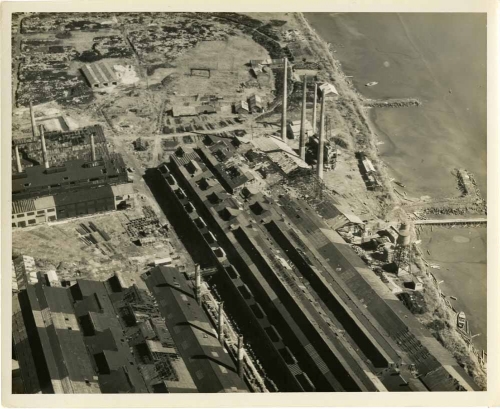
This article said nothing to the American home front readers that they didn’t already know, in fact the Associated Press ran a similar article that appeared on numerous front pages on December 8th of 1941. Simply stated, it reported that the Japanese were totally incapable of maintaining prominence in a war against the United States due to the fact that Japan’s war industry was far too small and they had few natural resources to rely upon. The reason that the subject was broached again in early 1943 was because it was all beginning to appear quite true. During the first 13 months of the war the Japanese let loose with everything they had, now they were on the defensive, and discovering that their industry was woefully inadequate.


Articles about the significance of 1943 can be read here can be read here and here…

Advertisement

Use shortcode [oma_ad position="summary_top"] (or other position) in your theme or widgets to display OMA Promotions here.

1939, American Legion Magazine, Recent Articles, World War One

”Never Again”
(American Legion Magazine, 1939)

In the attached article, an American journalist ruminated about the U.S. experience in W.W. I on the eve of W.W. II. All told, he didn’t think intervention was a good idea but was grateful America learned its lesson.


“Suffice it here to record the unquestioned fact that American determination which was enthusiastic at the outset became more and more grim as reality replaced imagination.”

Regretting American Intervention in WW I | WW1 as Unpopular War at Home
1939, American Legion Magazine, Recent Articles, World War One

”Never Again”
(American Legion Magazine, 1939)

In the attached article, an American journalist ruminated about the U.S. experience in W.W. I on the eve of W.W. II. All told, he didn’t think intervention was a good idea but was grateful America learned its lesson.


“Suffice it here to record the unquestioned fact that American determination which was enthusiastic at the outset became more and more grim as reality replaced imagination.”

NULL
1943, American Legion Magazine, Recent Articles, World War Two

1943: The Year the Japanese Had Shot Their Wad
(American Legion Magazine, 1943)

“Japan in the first 13 months of war let loose virtually everything she had against us. Now she’s feeling the pinch, for her lack of industrial capacity makes replacements slow, and she hasn’t the savvy to keep up with her opponents in improving plants and weapons. This is particularly true in the all-important matter of aircraft.”

Advertisement

Use shortcode [oma_ad position="summary_top"] (or other position) in your theme or widgets to display OMA Promotions here.

Racial Segregation at New Lincoln Junior High School 1943 | Racism in New Jersey 1943
1943, African-American History, PM Tabloid, Recent Articles

Jim Crow in Trenton
(PM Tabloid, 1943)

In 1943 the NAACP asked the administrators at Trenton’s New Lincoln Junior High School to explain why it should be entirely reserved for only Black students when such a practice was in violation of the State Civil rights Act.
The bureaucrats responded that ever since the school was built in the Twenties, that’s the way it had always been. Integration soon started.

Mass Japanese Infantry Surrender on Okinawa 1945 | Bushido Warriors Code Reconsidered 1945
1945, Collier's Magazine, Recent Articles, World War Two

When Bushido Took a Back Seat
(Collier’s Magazine, 1945)

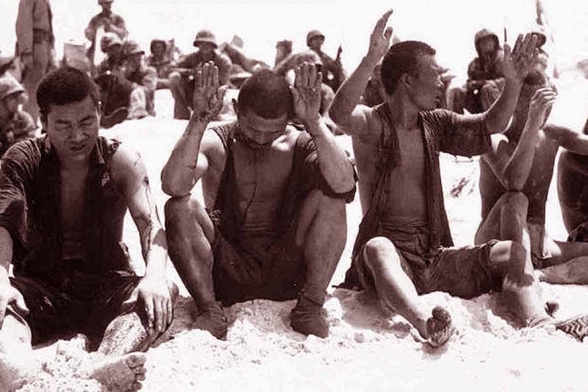
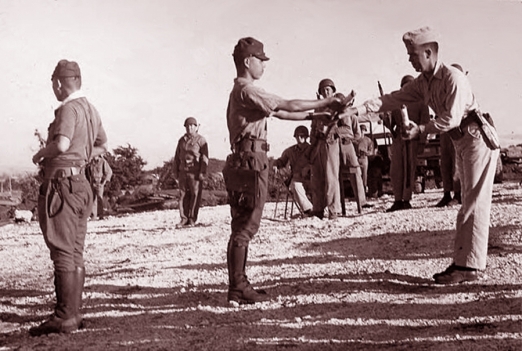
During the closing days of the Okinawa campaign, Japanese infantry decided to treat the much-ballyhooed Bushido warrior code as if it was a plate of week-old sushi.


“The mass-surrenders were a circus for our troops. It became a race to see which outfit could take the most prisoners. And Major General Lemuel C. Shepard’s Sixth Marine Division won the championship with 3,279 prisoners, while Major General Archibald V. Arnold’s 7th Army Division was runner-up with 2,627.”


More about the Battle of Okinawa can be read here.

Advertisement

Use shortcode [oma_ad position="summary_top"] (or other position) in your theme or widgets to display OMA Promotions here.

1924 Johnson-Reed Immigration Bill Explained by Senator David A Reed / National Origin Law of 1924 Explained
1929, American Legion Monthly, Immigration History, Recent Articles

Explaining the 1924 Immigration Bill
(American Legion Monthly, 1929)

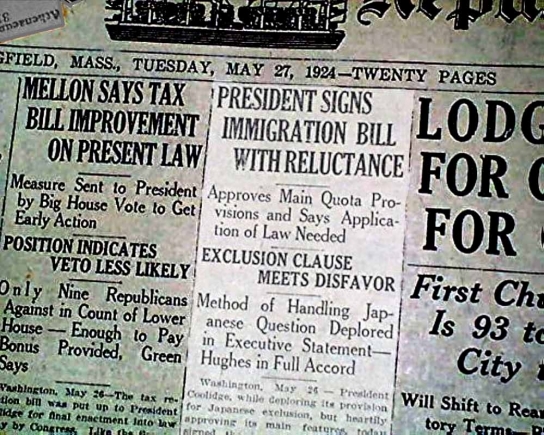
U.S. Senator David Reed (1880 – 1953) chose to take another victory lap as he recalled the glories of the legislation he co-authored in 1924 (the Johnson-Reed Bill, that placed restrictive quotas on immigration based on the 1890 Census). He explained why the legislation was introduced:


“The diagnosis showed that we were getting more immigrants than we could digest…we still harbor foreign colonies in our midst, animated by alien ideals, owing first loyalty to some other country, and giving only lip service – and not always that – to the land to which they have come to make their homes.”

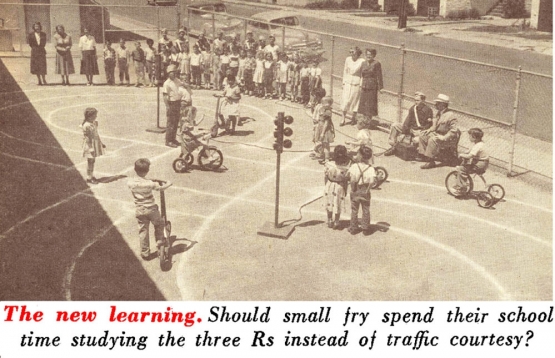
Resistance to Progressive Education Policies 1952
1952, Education, Pathfinder Magazine, Recent Articles

Problems with Progressive Education
(Pathfinder Magazine, 1952)

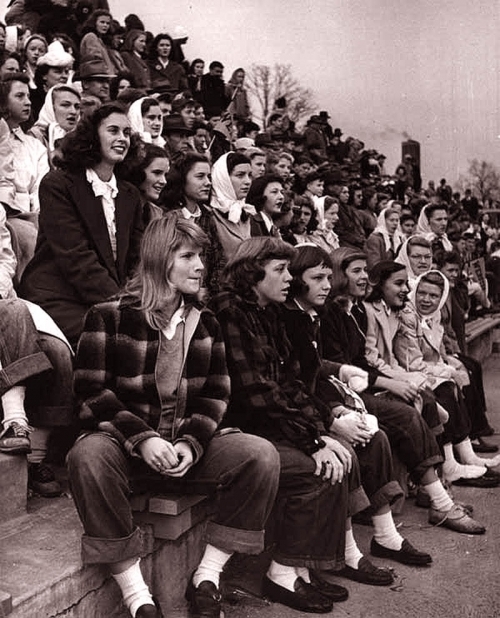
If you thought progressive education was a scourge that existed only in the digital age – you’d be wrong; the apostles of progressive education have simply been able to gain traction in our era where leftism has been enjoying greater momentum. Progressive education policies, intent on preserving the student’s “sense of self” over their genuine education, have been around for decades – and the attached article seems no different from much of the criticism that is leveled at them today.


“Critics of progressive education insist teachers don’t place enough emphasis on achievement in their fear of harming the child’s personality.”

Betty Grable Bio | Betty Grable Life and Times Pageant Magazine 1952
1952, Hollywood History, Pageant Magazine, Recent Articles

Betty Grable
(Pageant Magazine, 1952)

“For three consecutive years, 1946 through 1948, Betty Grable was the highest salaried woman in the world. For the past ten years she has never left the list of the nation’s ten biggest box office attractions. She also gets more fan mail (from 3,000 to 10,000 letters a week) than any other star in the motion picture industry. Oddly enough, most of it comes from women hungering for the Betty Grable beauty secrets.”

Advertisement

Use shortcode [oma_ad position="summary_top"] (or other position) in your theme or widgets to display OMA Promotions here.

Scroll to Top