Author name: editor

Spy Chief Bill Donovan Examined the German-American Bund 1940
1940, American Fascism, PM Tabloid, Recent Articles

The Dangers of the Bund
(PM Tabloid, 1940)

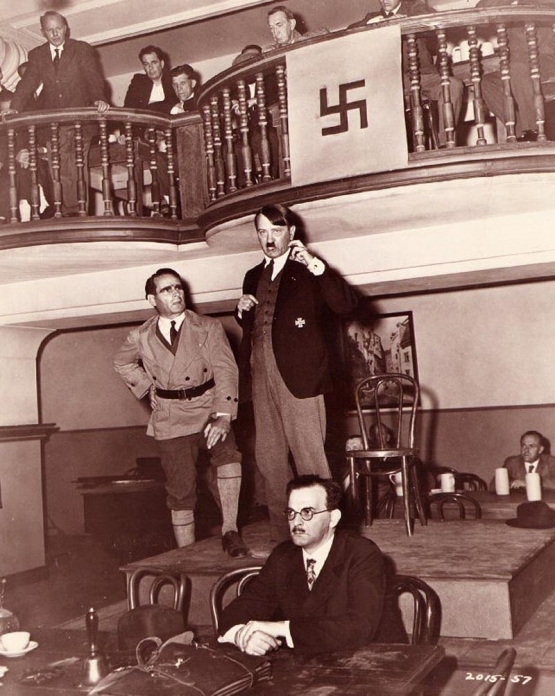
Here is an article from the man who would shortly be America’s premiere spy-master: William Wild Bill Donovan. In this report he examined the Trojan horse tactics of the German Foreign Organization:

Children of Germans naturalized half a century ago are still counted German by Berlin and every effort is made to convince them of the fact… It is safe to say that a very fair proportion of the non-refugee Germans who have become American since Hitler came to power did so with the secret intention of turning free and democratic America into ‘their‘ – that is, Hitler’s – America.

Izzy Einstein: Prohibition Agent No. 1 (Literary Digest, 1922)
1922, Prohibition History, Recent Articles, The Literary Digest

Izzy Einstein: Prohibition Agent No. 1
(Literary Digest, 1922)

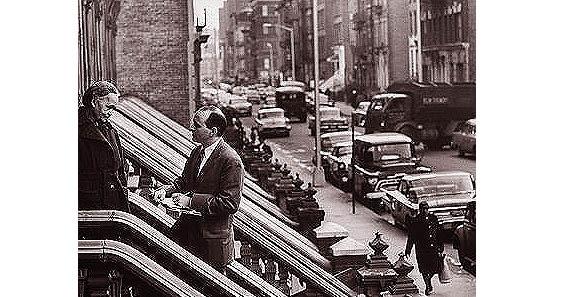
Here is an interview with Izzy Einstein (Isidor Einstein, 1880 – 1938): Prohibition agent and master of disguise:

A day with Izzy would make a chameleon blush for lack of variation…

He prepared himself to move in high, low and medium circles – on the excellent theory that the taste for liquor and the desire to sell it are no respecters of persons – and in all those circles he has since been whirling with rapidity and a quick-change adeptness.

Advertisement

Use shortcode [oma_ad position="summary_top"] (or other position) in your theme or widgets to display OMA Promotions here.

'Film Cannot Be Art'' (The Dial Magazine, 1927)
1927, Recent Articles, Silent Movie History, The Dial Magazine

‘Film Cannot Be Art”
(The Dial Magazine, 1927)

In this article, a 1920s critic forthrightly states that the primitive state of movie cameras renders them unfit as capable tools with which art can be created. He expands on his remarks by pointing out that 1920s film technology generally will never be able to render thought-provoking plots or articulate narratives until some necessary advancements are made in the field.


Another anti-silent film article can be read here…


-an additional article from the 1920s defaming silent film can be read here…

General Stilwell In Burma (Yank Magazine, 1944)
1944, Recent Articles, World War Two, Yank Magazine

General Stilwell In Burma
(Yank Magazine, 1944)

In May 1942 Lieutenant General Joseph Warren Stilwell (1883 – 1946) made that frank statement after leading a tired, battered band of 103 officers, men and nurses on a 20-day march into India, refugees from the Allied rout in Burma… Stilwell’s return to Burma is the result of two years of careful preparation in which two major projects were developed. One was a Chinese-American training center in India…The other was the Ledo Road, a supply route from India by which Allied troops moving into Northern Burma could be equipped and provisioned.

Christianity in the Confederate States (Confederate Veteran, 1922)
1922, Confederate Veteran Magazine, Faith

Christianity in the Confederate States
(Confederate Veteran, 1922)

In the war society of the South, religion played a leading roll… The Methodist and Presbyterian churches cut themselves away from their Northern brethren and cast their fortunes with the Southern cause… The churches of the South entered so whole heatedly into the cause of the war that they were invariably closed by the Union commanders. Throughout the war many revivals, special prayer meetings, and fasts were held for the success of Southern arms… The army was swept by religious fervor. All regiments departing for the front were consecrated. Many clergymen joined the army as chaplains… .


Click here to read about the chaplains in the Confederate Army.

Advertisement

Use shortcode [oma_ad position="summary_top"] (or other position) in your theme or widgets to display OMA Promotions here.

United States Religions in the 1940s | American Religions During WW2
1945, America Weekly, Faith

Statistics on American Religions
(America Weekly, 1945)

In this study concerning the religions of the United States during the mid-to-late period of the Second World War, it was revealed that there were a total of 256 religious bodies in the country; of this 13 reported a membership numbering in excess of one million followers. All-in, there were 72,492,669 who were members of one faith or another:

Catholics:…………………………….. 23,419,791


Methodists:…………………………. 8,046,129


Baptists:………………………………. 5,667,926

All the Protestant denominations added up to 41,943,104. The Jewish congregations clocked-in at 4,641,184.

Atheism Defended | Atheist Rights 1960s
1961, Coronet Magazine, Faith

A Christian Defends Atheists
(Coronet Magazine, 1961)

Following the close of the Second World War America took a good look at herself and slowly began to clean house. Assorted magazines and newspapers began to publish articles about various injustices that seemed to be overlooked during the previous centuries in order that remedies could be found and national integrity restored. When this column was sent to the printer it was a time when numerous states barred atheists from holding elective office, serving as a court witness or work as a school teacher. All of this was taking place in spite of the fact that the census bureau records indicated that as many as 36.6% of the U.S. citizenry had no affiliation with any religious institution.


Another article about an outstanding Episcopal bishop can be read here…

Religious Revival During WW II | 1940s Religious Revival | 1940s Christian Revival
1942, Faith, The American Magazine

The W.W. II Revival In Faith
(American Magazine, 1942)

When mobilization began, the government, as usual, undertook to provide spiritual ministry for the men. But many veteran clergymen doubted whether religion would catch on… But religion did catch on – and with such vigor that the chaplaincy services have been swamped by it. Army and Navy chapels are jam-packed. Demands for special services, for Bible study and for religious instruction, are more than can be met. Many men – Protestant and Catholic – are being baptized or confirmed. Some chaplains report an almost overwhelming interest in religion and church as a career.


Click here to read about the renewed interest in religion that existed on the home front…

Advertisement

Use shortcode [oma_ad position="summary_top"] (or other position) in your theme or widgets to display OMA Promotions here.

Chaplains in the Confederate Army During The Civil War | CSA Chaplains 1861-1865 | Confederate Chaplain James Hugh McNeilly
1918, Civil War History, Confederate Veteran Magazine

The Confederate Chaplains
(Confederate Veteran Magazine

A chaplain’s proper place in the Confederate Army was well defined in theory at least, but in fact each of us was a law unto himself and stayed wherever he liked. He belonged to the medical staff. But the medical staff in a campaign is divided… The regulation spot was with the surgeons.


Click here to read about the chaplaincy within the American military during World War II.

Advertisement

Use shortcode [oma_ad position="summary_top"] (or other position) in your theme or widgets to display OMA Promotions here.

The Cold War and Public Opinion ('47 Magazine, 1947)
1947, 47 Magazine, Recent Articles, The Cold War

The Cold War and Public Opinion
(’47 Magazine, 1947)

This article was written by Gallup Poll Editor William Lydgate who compared various opinion surveys that were taken shortly after the close of W.W. II with the ones that were created just one year later.


The 1945 poll revealed that the American public generally looked forward to friendly relations with the Soviet Union, shared remarkably high hopes for world peace and believed deeply that the United Nations would be responsible for the creation of a better world. However, the 1946 poll measured an enormous drop in this sunny disposition.

The John Powers Modeling Agency (Coronet Magazine, 1941)
1940s Modeling, 1941, Coronet Magazine, Recent Articles

The John Powers Modeling Agency
(Coronet Magazine, 1941)

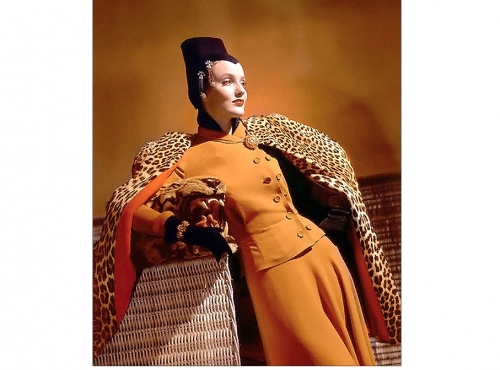
They sip your favorite coffee, drive your dream car, display the latest fashions, show you how to cook a waffle: they are potent forces in the scheme of American advertising. Their faces and figures adorn the covers of countless magazines…often they develop into stars of the cinema. They come from all over America to an office on Park Avenue, New York, where a quiet, discerning man named John Robert Powers appraises their charms and schools them for the job of selling sables to society or groceries to the great American housewife.


Beginning in the mid-Twenties and spanning the years leading up to the late Forties, John Robert Powers (1892 – 1977) created and maintained the first modeling agency in New York City (if not the world) and during the Forties, the Powers Agency grossed over five million dollars a year. Attached are nine photos of the most popular fashion models he represented in 1941; a unique breed of woman known at the time as Powers girls.

Advertisement

Use shortcode [oma_ad position="summary_top"] (or other position) in your theme or widgets to display OMA Promotions here.

Mariano Fortuny and his Knossos Scarf (Vogue Magazine, 1912)
1912, Fashion, Recent Articles, Vogue Magazine

Mariano Fortuny and his Knossos Scarf
(Vogue Magazine, 1912)

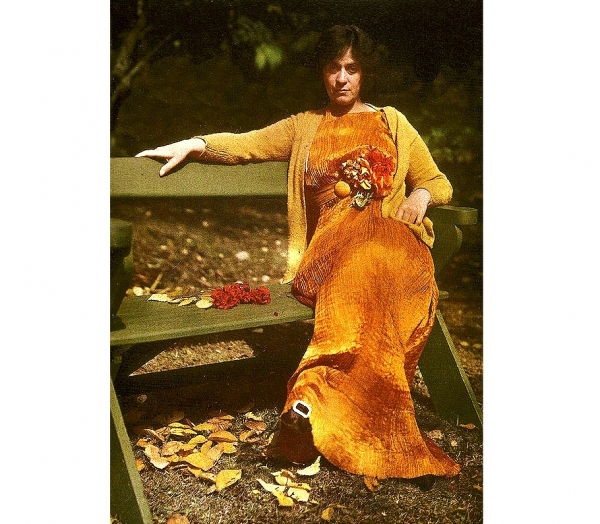
Marguerite O’Kane, a genuine enthusiast of the Arts and Crafts Movement, enjoyed the unique distinction of writing the first review for American VOGUE covering the work of Mariano Fortuny (Mariano Fortuny y Madrazo: 1871 – 1949). Although celebrated in Europe since making his first gown in 1906, the Knossos Scarf, a long sheer silk rectangle inspired by the costumes of ancient Crete, he was unknown to most fashion-minded Americans until this article appeared during the closing weeks of 1912.


Iconic fashion designer Yves Saint Laurent began his meteoric career as a very young man; click here to read about him.

Advertisement

Use shortcode [oma_ad position="summary_top"] (or other position) in your theme or widgets to display OMA Promotions here.

Scroll to Top