Author name: editor

FDR and Business 1938 | FDR Criticism in his Second Term
1938, Liberty Magazine, Recent Articles, The Great Depression

FDR and his Learning Disabilities
(Liberty Magazine, 1938)

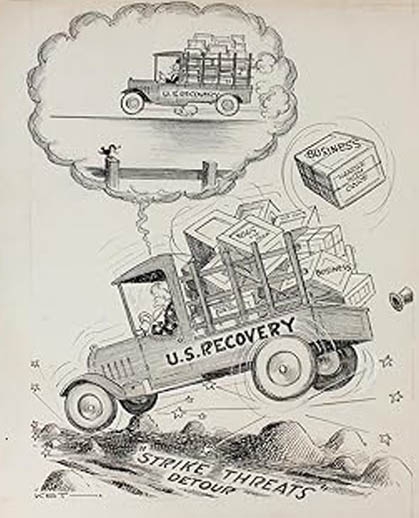
Liberty publisher Bernarr MacFadden (1868 – 1955) was a reliable critic of FDR and his economic policies. In this column MacFadden lambasts the President for making error after error and learning from none of them. He points out that the open market economy of the United States has traditionally provided Americans with the world’s highest standard of living, and yet:


“They would like to ignore precedent… entirely cast aside and forget the extraordinary results of our experiences in following the American system. They hate business and everything connected with it.”
Blue Laws Across the United States | History of Blue Law Legislation in America
1963, Christian Herald, Faith, Recent Articles

Sabbath Challenges
(Christian Herald, 1963)

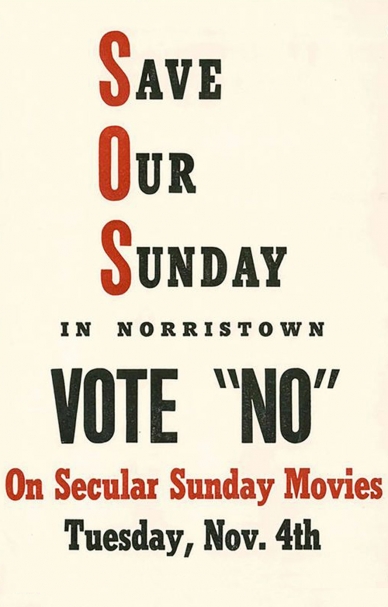
In the early Sixties, American church attendance was dropping as a new spirit of secularism was sweeping across the fruited plains. More and more merchants and restaurateurs were opening their businesses on Sundays and challenging the age-old Blue Laws as a result. This article examines what the Bible said about “keeping the sabbath holy”, and why Blue Laws were enacted in so many states.

Critical Article on FDR 1942 | George Creel on FDR 1942 | Youthful Optimism of FDR
1942, F.D.R., Liberty Magazine, Recent Articles

Sticking It to FDR
(Liberty Magazine, 1942)

George Creel (1876 – 1953), the nation’s first and only official censor (1917 – 1918), knew FDR for twenty-five years, and in this wartime recollection he made FDR wish that the two had never met. This is the type of article Creel would never have allowed to be published twenty some years earlier because it sought to reduce confidence in the Commander-in-Chief. Yet, with the war in its eleventh month, Creel gave it to FDR with both barrels:


“No man ever dreamed more nobly or had less skill in making his dreams come true.”

Advertisement

FDR's High Wartime Taxation | Federal Income Tax on the WW2 Home Front
1942, F.D.R., PM Tabloid, Recent Articles

FDR’s Proposal to Limit Personal Income
(PM Tabloid, 1942)

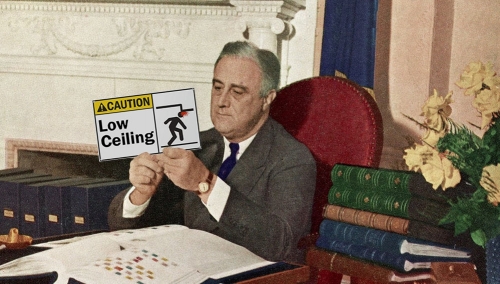
By the end of the war, FDR’s administration had placed taxable personal income as high as 94%(!). His Brain Trust were all big believers in Federal intervention into the economy – offering all sorts of price freezes and wage freezes in order to limit competition during the Great depression (as if that was a good). As the war kicked-in to high gear, FDR installed a low ceiling upon all high-earners and capped their salaries at $25,000.00 per-year.


Click here to read about FDR’s airplane.

Advertisement

Naval Construction Battalions in WW2 | Seabees on Guadalcanal 1942
1945, All Hands Magazine, Recent Articles, War at Sea

More About the Seabees
(All Hands Magazine, 1945)

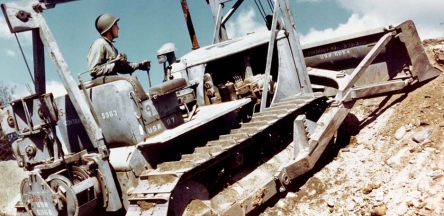
“From the start the naval Construction Battalions were unusual outfits, mostly because of the men in them and because theirs was a new kind of warfare… Every Seabee found himself doubling in various trades. It was thus the construction men developed their most important tools – improvisation, ingenuity and guts. Often parts, materials and equipment had to be manufactured on the spot in shops hastily thrown together from salvaged enemy materials and tools… But as the Seabee organization grew (from an original force of 3,300 to a peak of 247,155, of which 83 percent were overseas) and its activities increased, the battalions picked up plenty of know-how, enabling them to smooth out and speed up operations.”

Tank Warfare in Tunisia 1943 | Stuart M-3 Light Tank Fighting in North Africa 1943 | Primary Source Article Concerning Tank Warfare in North Africa 1943
1943, American Magazine, North Africa, Recent Articles

An American Tank in Tunisia
(American Magazine, 1943)

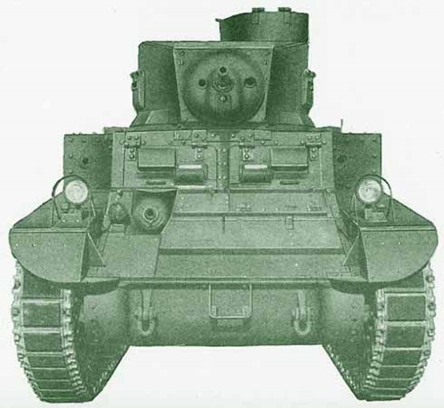
Here is first-person account of life in an M3 Stuart tank fighting in Tunisia:


“We were ordered to hold, and hold we did. But we took a terrible shellacking. We dodged around, spitting at the Germans with our little 37mm gun. Every now and then one of their heavy tank shells or high-velocity 88s would hit one of our light tanks and smash it. The wounded would crawl out, and those who could walk would carry or drag those who couldn’t… In the afternoon, when we were finally ordered to withdraw, we had only 9 of 18 tanks left, and some of those were damaged. We took what wounded we could into the tanks and held them in our arms.”

Advertisement

1944, Pageant Magazine, Recent Articles, War at Sea

The Seabees
(Pageant Magazine, 1944)

In another article on this site, these words were quoted from the captured dispatches of a Japanese general writing to his superiors:


[The Yank] is a wizard at handling machinery and he can build airfields, roads and advance bases with uncanny speed.”


– he was, of course, referring to the famous Construction Battalions (Seabees) of the U.S. Navy. This article will tell you all about them.

1944, Pageant Magazine, Recent Articles, War at Sea

The Seabees
(Pageant Magazine, 1944)

In another article on this site, these words were quoted from the captured dispatches of a Japanese general writing to his superiors:


[The Yank] is a wizard at handling machinery and he can build airfields, roads and advance bases with uncanny speed.”


– he was, of course, referring to the famous Construction Battalions (Seabees) of the U.S. Navy. This article will tell you all about them.

Advertisement

Advertisement

Advertisement

Scroll to Top