Author name: editor

The Damaged Prestige of the FBI (Quick Magazine, 1952)
1952, Quick Magazine, The Cold War

The Damaged Prestige of the FBI
(Quick Magazine, 1952)

When this article appeared on the newsstands, J. Edgar Hoover had been FBI chief for nearly thirty years. In all that time he had enjoyed being photographed among celebrities and adored patting himself on the back by writing numerous magazine articles about the FBI. But by the time the early Fifties came along Hoover and his Federal agency were no longer the teflon icon that they used to be; the failings of the FBI were adding up and Hoover did not seemed accountable.

The Coeds of the Cold War (Quick Magazine, 1953)
1953, Quick Magazine, The Cold War

The Coeds of the Cold War
(Quick Magazine, 1953)

The original Generation X was that group of babies born in the late Twenties/early Thirties: they were the younger brothers and sisters of the W.W. II generation. There seemed to have been some talk in the early Fifties that this group of Americans were becoming sardonic and cynical – raised on the W.W. II home front, only to find that when they came of age they were also expected to sacrifice their numbers in a foreign war:

How can you help being pessimistic when you hear that the boy you sat next to in high school English was killed last week in Korea?


– opined one of the nine college women interviewed on the attached pages. These Cold War women were asked what was on their minds as they prepared for jobs, marriage and family.

UN Peace Keepers history | Dean Acheson Advocate for UN Peace Keepers | UN Army History
1950, Pathfinder Magazine, The Cold War

Let The UN Keep The Peace
(Pathfinder Magazine, 1950)

In the fall of 1950, U.S. Secretary of State Dean Acheson stood before the United Nations General Assembly and reminded them that five years earlier, when the U.N. Charter was conceived, it was agreed that the U.N should have a military arm with which to enforce its edicts. He prodded their memories to a further degree when he reminded them that they’d have one today if the Soviet delegates hadn’t objected so vociferously.

Korea has shown how ill prepared the United Nations is to stop aggression. The defense of Korea is nominally a U.N. responsibility. But 98% of the effort, and an equally high percentage of the ‘United Nations’ casualties, come from the United States.

Advertisement

Use shortcode [oma_ad position="summary_top"] (or other position) in your theme or widgets to display OMA Promotions here.

'What the Negro Means to America'' (Atlantic Monthly, 1929)
1929, African-American History, The Atlantic Monthly

‘What the Negro Means to America”
(Atlantic Monthly, 1929)

In the attached article Count Hermann Alexander Keyserling (1880 – 1946), German philosopher and social critic, wrote about those uncommon cultural elements within the African-American culture that renders American blacks as an unprecedented, unique cultural force in the world:

There has never been anything like the American Negro in Africa, nor is there anything like him in the West Indies or in South America.

African-Americans Who Live As Whites | Blacks who Pass as Whites| Crossing the Color Line 1949
1949, African-American History, Liberty Magazine

The Black Women Who Pass For White
(Liberty Magazine, 1949)

In most of our larger cities and many small towns there are thousands of Negroes who have successfully ‘gone over the line’ and are now living as white. Among them, it is said, are several well-known athletes and members of Congress – But you don’t hear much about the Negro women who pass. The roving male nature makes it easier for a man to pass completely, though it involves giving up his family as well as his friends. A woman finds passing harder to take.


Click here to read about the social differences between darker skinned and lighter skinned black people.

Advertisement

Use shortcode [oma_ad position="summary_top"] (or other position) in your theme or widgets to display OMA Promotions here.

Mario Moreno: The Mexican Charlie Chaplin (Collier's Magazine, 1942)
1942, Collier's Magazine, Interviews: 1912 - 1960, Recent Articles

Mario Moreno: The Mexican Charlie Chaplin
(Collier’s Magazine, 1942)

A 1942 article about Mexican film comedian Mario Moreno (1911 – 1993) who was widely known and loved throughout Latin America and parts of the West as Cantinflas, the bumbling cargador character of his own creation. Born in the poorest circumstances Mexico could dish-out, Mario Moreno achieved glorious heights in the entertainment industry; by the time he assumed room temperature in the early Nineties he had appeared in well over fifty films.

Advertisement

Use shortcode [oma_ad position="summary_top"] (or other position) in your theme or widgets to display OMA Promotions here.

In Memorium, 1914 (Saturday Review of Literature, 1929)
1929, The Saturday Review of Literature, Writing

In Memorium, 1914
(Saturday Review of Literature, 1929)

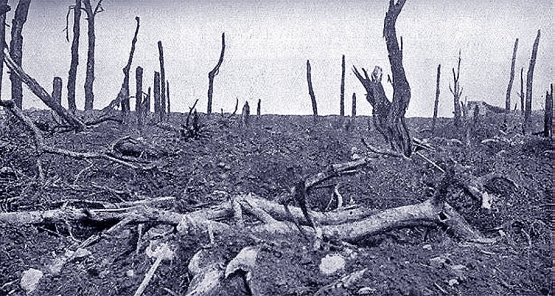
The editors for the August 3, 1929 issue of The Saturday Review of Literature removed their collective caps in deep solemnity for the disasters that began that week just fifteen years earlier when the opening shots were fired that began the First World War.


It was a fitting tribute coming from a literary magazine in 1929, for that would be the year that introduced some of the finest World War I books to the reading public: Undertones of War (Blunden), The Path of Glory (Blake) and All Quiet on the Western Front (Remarque), which are all mentioned herein.

'The Battle of the Somme'' by Philip Gibbs (Literary Digest, 1917)
1917, The Literary Digest, Writing

‘The Battle of the Somme” by Philip Gibbs
(Literary Digest, 1917)

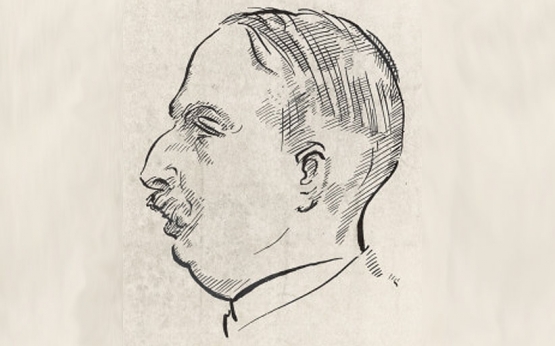
This book review was published in an American magazine shortly after President Wilson and the U.S. Congress declared war on the Germany. The book in question, The battle of the Somme, was written by Philip Gibbs (1877 – 1962). Highly respected among his peers and the reading public, Gibbs was knighted for his efforts at the war’s end but soon he let the world know what he really thought of the war and, in particular, his feelings concerning General Douglas Haig.


Gibbs wrote a number of books that were critical of war, click here to read a review of More That Must Be Told (1921).

Advertisement

Use shortcode [oma_ad position="summary_top"] (or other position) in your theme or widgets to display OMA Promotions here.

bio of T.E. Lawrence of Arabia and all his doings in the desert
1930, The Saturday Review of Literature, Writing

T.E. Lawrence of Arabia
(Saturday Review of Literature, 1930)

This is a 1930 review of of Gurney Slade’s fictionalized account of the World War One Arab revolt, In Lawrence’s Bodyguard. The book was intended as a novel for boys and is here reviewed anonymously by one who was simply credited as, A Friend of T.E. Lawrence. Gurney Slade (pen name for Stephen Bartlett) was libeled as a man of taste and sensibility and the novel was generally well liked.

‘The Arab business was a freak in my living; in ordinary times I’m plumb normal.’ Normal, yes; but only the normally strong arise to be normal after trial and error.

You might also like to read this 1933 article about T.E. Lawrence.

Click here to read about Lawrence’s posthumous memoir and the literary coup of 1935.

'Company K'' by William March (Saturday Review of Literature, 1933)
1933, The Saturday Review, Writing

‘Company K” by William March
(Saturday Review of Literature, 1933)

The New York Times war correspondent Arthur Ruhl (1876 – 1935) reviewed a book that would later be seen as a classic piece of World War One fiction: Company K
by William March (born William Edward Campbell 1893 – 1954). Awarded both the French Croix de Guerre and the Distinguished Service Cross, March gained an understanding of war and the frailties of human character as a member of the Fifth Marines fighting at Belleau Wood and participating in the big push during the San-Mihiel Offensive:

The outstanding virtues of William March’s work are those of complete absence of sentimentality and routine romanticism, of a dramatic gift constantly heightened and sharpened by eloquence of understatement.

No More Parades' by Ford Madox Ford (Literary Digest, 1926)
1926, The Literary Digest, Writing

No More Parades’ by Ford Madox Ford
(Literary Digest, 1926)

The attached article is a 1926 review of Ford Madox Ford’s (1873 – 1939) novel, No More Parades, his second in a series of four related novels concerning the Great War. Billed as the most highly praised novel of the year, the reviewer lapses into superlatives and exults:

Not since Three Soldiers has a novel of the war made such an impression on reviewers as Ford Madox Ford’s No More Parades… All our ‘intellectuals’ are reading it…our young intellectual novelists will be heavily influenced by it or will attempt to imitate a whole-cloth imitation of it.


Ford was a veteran of the war who served with the Royal Welsh Fusiliers; the article is illustrated with a black and white photo of the author standing shoulder to shoulder with Ezra Pound and James Joyce.

Advertisement

Use shortcode [oma_ad position="summary_top"] (or other position) in your theme or widgets to display OMA Promotions here.

WW I Correspondent | WW I Reporter | War Correspondent Frederick Palmer
1921, Current Opinion Magazine, Writing

Another War Correspondent Remembers With Anger
(Current Opinion, 1921)

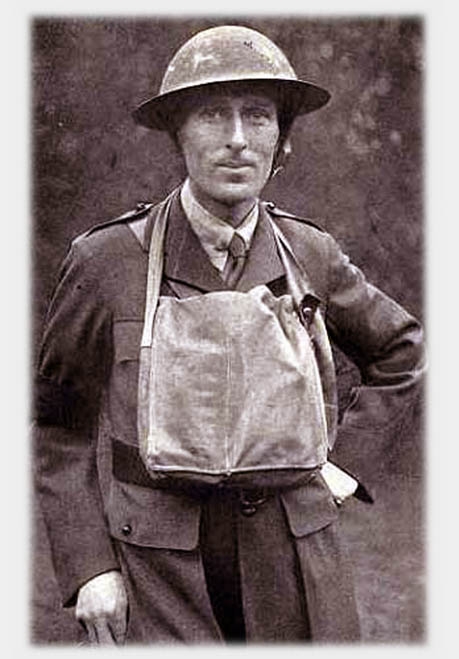
American journalist Frederick Palmer (1873 – 1958) began his career as a correspondent covering the Greco-Turkish War (1896 – 1897); by the time the First World War flared up his stock was at it’s very peak and and was selected by the British Government to serve as the sole American reporter to cover the efforts of the B.E.F.. In the Spring of 1917, when the U.S. entered the war, Palmer was recruited by the American Army to serve as the press liaison officer for General Pershing. A good deal of Palmer’s experiences can be gleaned from this article, which was written as a review of his wartime memoirs, The Folly of Nations (1921).


Another Frederick Palmer article can be read here…

A War Correspondent Remembers With Anger (Current Opinion, 1922)
1927, Current Opinion Magazine, Writing

A War Correspondent Remembers With Anger
(Current Opinion, 1922)

A single paragraph review of Sir Philip Gibbs’ (1877 – 1962) book, More That Must Be Told. The book was written as a sequel to his previous volume which cataloged the many blunders and assorted outrages of the Great War, Now It Can Be Told (1920). The reviewer wrote:


Click here to read about the new rules for warfare that were written as a result of the First World War – none of them pertain to the use of poison gas or submarines.

Advertisement

Use shortcode [oma_ad position="summary_top"] (or other position) in your theme or widgets to display OMA Promotions here.

Scroll to Top