Author name: editor

Baron Fritz & No Hard Feelings (Saturday Review of Literature, 1930)
1930, The Saturday Review, Writing

Baron Fritz & No Hard Feelings
(Saturday Review of Literature, 1930)

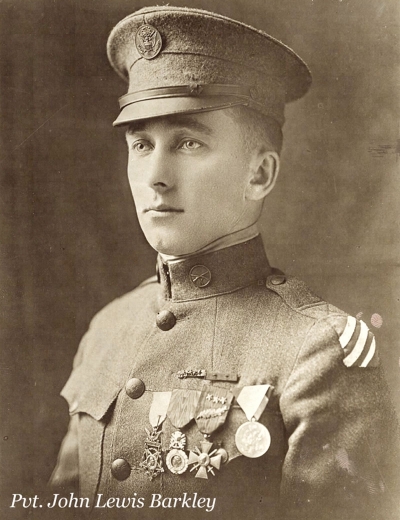
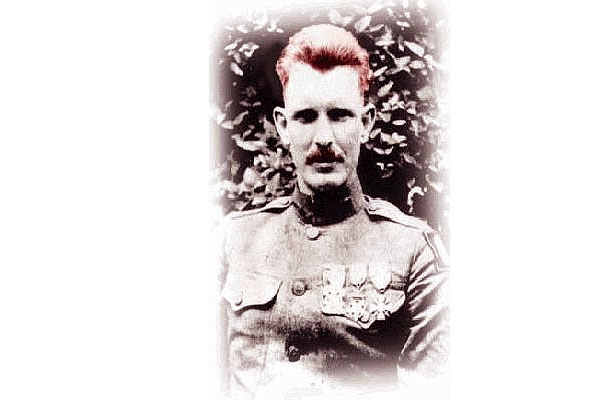
Saturday Review’s Emerson G. Taylor reviewed two World War I books: Baron Fritz by Dante scholar Karl Federn, which he liked, and No Hard Feelings, by Medal of Honor recipient John Lewis Barkley, which he did not:


In this week’s other narrative of soldier’s life, John Lewis Barkley, late Corporal, K Company, 4th United States Infantry, tells the world that he and his gang were exceedingly tough ‘hombres’, that, in the Second Battle of the Marne and in the Meuse Argonne operations, he killed a vast number of bloodthirsty Germans with his trusty rifle, by serving a machine-gun, or with a pistol and a knife, that he was profusely decorated, was always in the fore-front of duty and danger, and spent a furlough in Paris with Marie…Ho-hum.

Advertisement

Use shortcode [oma_ad position="summary_top"] (or other position) in your theme or widgets to display OMA Promotions here.

Ludendorff's Apology (The Nation, 1920)
1920, The Nation Magazine, Writing

Ludendorff’s Apology
(The Nation, 1920)

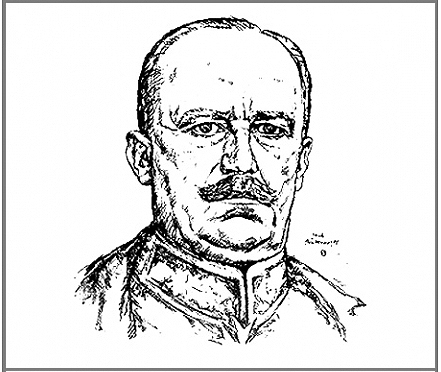
A second and far more thorough book review of My Story, by German General Erich von Ludendorff (1865 – 1937).

When the bitterness of these days has passed, historians will very likely classify Ludendorff as first among the military geniuses of his time. But his ‘own story’ will have importance principally because of certain sidelights it casts upon his motives and psychology.


A shorter review of Ludendorff’s memoir can be read here.


Read about Ludendorff’s collusion with Hitler…

General Von Ludendorff Defends Himself (The Dial Magazine, 1920)
1920, The Dial Magazine, Writing

General Von Ludendorff Defends Himself
(The Dial Magazine, 1920)

Attached is a review of Von Ludendorff’s memoir entitled My Own Story as it appeared in a much admired journal of the arts.

‘Ludendorff’s Own Story’ by Erich Friedrich Von Ludendorff gives a G.H.Q. view of the war from August 1914 to November 1918. It has a certain quality of forthrightness which makes its fallacies and mistakes apparent to the reader even when they escape the author. Ludendorff’s thesis is that the war was lost because the the army at home had not another Ludendorff to direct it…


In 1920 the representatives from the victorious nations who convened at Versailles demanded that Kaiser Wilhelm, General Ludendorff and an assortment of various other big shots be handed over for trial – click here to read about it.


A longer review of Ludendorff’s memoir from The Nation can be read here.

Click here to read about Ludendorff’s association with Hitler.

A Review of Grand Admiral Von Tirpitz Memoir (The Dial Magazine, 1920)
1920, The Dial Magazine, Writing

A Review of Grand Admiral Von Tirpitz Memoir
(The Dial Magazine, 1920)

The well respected arts journal, THE DIAL, published a very brief notice reviewing the post-war memoir, My Memoirs, by Admiral Alfred Von Tirpitz (1849-1930). The Dial reviewer found the Von Tirpitz’ memoir interesting as a psychological study:

My Memoirs, by Grand Admiral von Tirpitz is one of those elaborate vindications which carry the authentic conviction of guilt…If Germany was really, as the Grand Admiral estimates, a sheep in wolf’s clothing, a few more memoirs like this will leave no regret about her fate.


Read an article about the many faults of the German Navy during the Second World War…

Advertisement

Use shortcode [oma_ad position="summary_top"] (or other position) in your theme or widgets to display OMA Promotions here.

Recalling Two of the War's Blunders (The English Review, 1920)
1920, The English Review, Writing

Recalling Two of the War’s Blunders
(The English Review, 1920)

Added to the growing pile of reviews that attempted to sort out all the various explanations as to why the war went so badly for practically all the nations involved was this 1920 article that presented a clear description of the 1914 drive on Paris as well as the disaster that was the Gallipoli campaign.


The books reviewed were penned by two of the war’s principal players: The March on Paris by General Alexander Von Kluck (1846-1934) and Gallipoli Diary by General Sir Ian Hamilton (1853-1957).


The story of the German onrush and it’s memorable check can now be pieced together with accuracy. It tallies with the account of General Sir Frederick Maurice. We now know that the Germans failed through want of General Staff control, through inadequate intelligence, above all, through striking at two fronts at the same time.

US 165th Infantry Regiment in WW I | AEF Battle of the Ourcq River 1918 | AEF Attack on Kriemhilde Stellung 1918
1920, The Home Sector, Writing

‘Father Duffy Tells What Happened”
(The Home Sector, 1920)

In this article, the famous chaplain of the 165th Infantry (formerly the NY Fighting 69th) Father Francis Duffy (1874 – 1932) describes how the regiment was ripped to shreds in two offensives – hinting all the while that somebody blundered:

Since 1915 no commanders in the older armies would dream of opposing too strongly wired and entrenched positions [with] the naked breast of their infantry. They take care that the wire, or part of it at least, is knocked down by artillery or laid flat by tanks before they ask unprotected riflemen to [breach the line]. When the wire is deep and still intact and strongly defended, the infantry can do little but hang their bodies upon it.


More about Father Duffy can be read here…

Advertisement

Use shortcode [oma_ad position="summary_top"] (or other position) in your theme or widgets to display OMA Promotions here.

'A Brass Hat in No Man's Land'' - Reviewed by Robert Graves (Now & Then, 1930)
1930, Writing

‘A Brass Hat in No Man’s Land” – Reviewed by Robert Graves
(Now & Then, 1930)

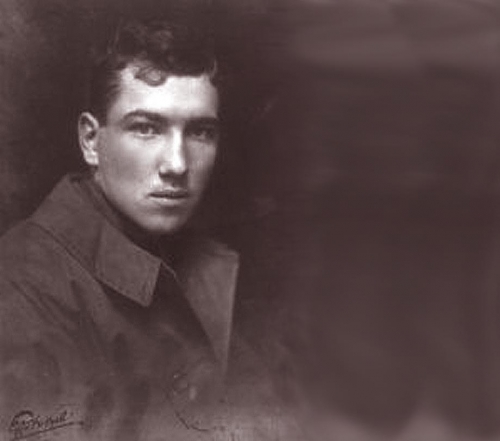
War poet Robert Graves was assigned the task of reviewing the W.W. I memoir A Brass Hat in No Man’s Land
by the English General F.P. Crozier and came away liking it very much: It is the only account of fighting on the Western Front that I have been able to read with sustained interest and respect. Crozier’s memoir did not spare the reader any details involving the nastier side of the war; he reported on trench suicides, self-inflicted wounds and mutinies:

My experience of war, which is a prolonged one, is that anything may happen in it from the highest kinds of chivalry and sacrifice to the very lowest forms of barbaric debasement.


Click here to read the 1918 interview with General Hindenburg in which he declared that the Germans lost the war as a result of the American Army.

Memoirs of a Fox-Hunting Man (The Bookman, 1929)
1929, The Bookman, Writing

Memoirs of a Fox-Hunting Man
(The Bookman, 1929)

Heartlessly torn from the brittle pages of a 1929 issue of The Bookman was this summary and review of Memoirs of a Fox-Hunting Man by Sigfried Sassoon:

During the war something was lost to Englishmen which they can recapture in nostalgic memories but never recover in fact. This strange novel of Sassoon’s reminds one of the faintly faded colors and old-fashioned security of English sporting prints.

Siegfried Sassoon on the Soldier Poets (Vanity Fair, 1920)
1920, Recent Articles, Vanity Fair Magazine, Writing

Siegfried Sassoon on the Soldier Poets
(Vanity Fair, 1920)

The following five page article was written by the World War I poet, Siegfried Sassoon (1886-1967), in an

attempt to give a rough outline of what the British poets did in the Great War, making every allowance for the fact that they were writing under great difficulty….


Sassoon gave a thorough going-over of every war poet that he admired, naming at least twenty. It is a wonderful and revealing read for all those who have come to admire the poets of the First World War and Sigfried Sassoon in particular.


Click here to read additional articles about W.W. I poetry.

Advertisement

Use shortcode [oma_ad position="summary_top"] (or other position) in your theme or widgets to display OMA Promotions here.

Arsenal of Democracy Displaces the great depression | Freeport Texas 1940
1940, Collier's Magazine, Recent Articles, The Great Depression

Prosperity Returns to Freeport, Texas
(Collier’s Magazine, 1940)

In 1940, when a defense plant moved into the Gulfport town of Freeport, Texas, the Great Depression came to a screeching halt. Within three months their population shot up from 3,100 to a whopping 7,500, and the economic blessing was not simply confined to that one region:

In Corpus Christi they have a nice little plum in the form of a $25,000,000 naval air base. Houston is getting a $2,000,000 refurbishing of Ellington Field. Randolph Field at San Antonio is getting a costly going over.


Life in Freeport was good. When a local shoeshine lad had found that his pockets were flush with cash after three day’s labor, he exclaimed –

We’re in high cotton now!

Article by Reverend Daniel A Poling | Dr Daniel Poling editor of the Protestant Christian Herald
1950, Faith, Pageant Magazine, Recent Articles

The Dying Soldier
(Pageant Magazine, 1950)

In this article, Reverend Daniel A. Poling (1884 – 1968), editor of the Christian Herald (Protestant) recalled his visit to the bedside of a dying American soldier in the war-ravaged France of 1944. The young man, a believer in Christ, expressed his undigested views of what lay before him in the afterlife. The author shared his understanding on the topic and found that they weren’t at all dissimilar.

Fritz Thyssen Confession 1940 | Fritz Thyssen Turned On Hitler 1939 | Fritz Thyssen Rejected Nazism 1939
1940, Adolf Hitler, Recent Articles, The American Magazine

‘I Backed Hitler”
(American Magazine, 1940)

German millionaire industrialist Fritz Thyssen (1873 – 1951) paid the way for the Nazi party from its earliest days all the way up to Hitler’s place in the sun. When Hitler attacked Poland, Thyssen bailed. In this column he confesses all:

I met Hitler for the first time in 1923… Ludendorf arranged my first meeting with Hitler at the home of a mutual friend. What a different character Hitler was then! He was deferential and anxious to learn. You may not believe me, but he had a sense of humor, actually telling many jokes… Hitler as a speaker was amazing. I asked him how he achieved such success addressing people. He said, ‘I don’t know, but after ten minutes, like a band leader, I usually make contact with the crowd, and then everything is all right.’

Advertisement

Use shortcode [oma_ad position="summary_top"] (or other position) in your theme or widgets to display OMA Promotions here.

Happy Days Are Here Again! (Pageant Magazine, 1959)
1959, Pageant Magazine, Recent Articles, Repeal

Happy Days Are Here Again!
(Pageant Magazine, 1959)

In 1959 an eyewitness to American Prohibition recalled the unbridled glee that spread throughout the land when the Noble Experiment called it quits (December 5, 1933):

The legal celebrations that were held on the first night of repeal were mostly in keeping with the wet organizations’ desire to show that this was an historic moment far more important for the freedom of choice it restored to the public. In New Orleans cannons were shot off, whistles blown and city-wide parades held to greet repeal. Boston bars, permitted by lenient local authorities to stock up with legal booze into the night, were so packed by ten o’clock that a latecomer was lucky to get inside the doors, much less get a drink. The next day there were long lines of 100 and more people in front of liquor stores from early morning until closing…

All Quiet on the Western Front (Saturday Review of Literature, 1929)
1929, The Saturday Review of Literature, Writing

All Quiet on the Western Front
(Saturday Review of Literature, 1929)

Henry Seidel Canby (1878 – 1961) was one of the founding editors of The Saturday of Literature
and in this article he put pen to paper and presented his readers with a concise summation of what he liked to call the five phases of war literature. Canby sensed that since 1919 there had been five unique types of war books, all produced by veterans, and that Erich Maria Remarque’s (1898 – 1970) All Quiet on the Western Front was typical of the fifth variety that was appearing in 1929:

The balance hangs true in Remarque. Pacifism is a theory, militarism is a theory, war is a necessity – not in its causes, for who really hates the enemy! – but for this doomed generation it is a fact. War for these men is normal, which does not mean that they like it.


A 1930 article about the movie can be read herecan be read here.

CARRY ON by Coningsby Dawson (NY Times, 1917)
1917, The New York Times, Writing

CARRY ON by Coningsby Dawson
(NY Times, 1917)

Attached, you will find the 1917 review of Carry On
by Coningsby Dawson (1883 – 1959). The book is a collection of the author’s beautifully crafted letters that were written to his family while he served on the Western Front during the First World War. Dawson’s ability to convey the urgency of the allied cause was so well received he was assigned to write two additional books by the British Ministry of Information: The Glory of the Trenches and Out to Win, both published in 1918 (neither of the two were any where near as moving as the one that is reviewed here).


Click here to read about W.W. I art.

Advertisement

Use shortcode [oma_ad position="summary_top"] (or other position) in your theme or widgets to display OMA Promotions here.

Scroll to Top