Author name: editor

The Return of the Coldstream Guards (The New Red Cross Magazine, 1919)
1919, Aftermath (WWI), Recent Articles, The New Red Cross Magazine

The Return of the Coldstream Guards
(The New Red Cross Magazine, 1919)

To-day was a great day in London. The Guards’ Division was inspected by the King at Buckingham Palace and had a triumphant march to welcome them home…East End and West End rubbed shoulders to-day and showed the same respect for each other that not so long ago they had shown in the trenches.


Click here to read an article about the German veterans of W.W. I.

Advertisement

Use shortcode [oma_ad position="summary_top"] (or other position) in your theme or widgets to display OMA Promotions here.

1923 Time Magazine Article About Prohibition | Volstead Act and Canada | Canadian Liquor and Prohibition
1923, Prohibition History, Recent Articles, Time Magazine

Prohibition And Our Northern Neighbor
(Time Magazine, 1923)

When the architects of Prohibition were planning their dry fairyland they always knew that the weak spot in their scheme was going to be the vast borderlands that separate the United States from Canada and Mexico.
The attached article from 1923 outlines the concerns President Coolidge’s administration had regarding Prohibition law enforcement along the Canadian frontier.

The Age Progression of President Lincoln (Coronet Magazine, 1945)
1945, Abraham Lincoln, Coronet Magazine

The Age Progression of President Lincoln
(Coronet Magazine, 1945)

Ever since the age of photography began, one of the semi-official pastimes of the American people involves taking note of the rapid facial decay of their assorted presidents while in-office – and as the collected photographic portraits of Abraham Lincoln clearly indicate, no one will be naming a skincare product after him any time soon, however, the aging process that effected his face so dramatically has been the subject of Lincoln admirer’s through the years, and some are collected in the attached article.

Advertisement

Use shortcode [oma_ad position="summary_top"] (or other position) in your theme or widgets to display OMA Promotions here.

Hitler Youth Boy Soldiers Captured 1945 | German Hitler Youth 1945 POW Camp
1945, POWs, Recent Articles, Yank Magazine

German Boy Soldiers in Captivity
(Yank Magazine, 1945)

A fascinating article reporting on the Baby Cage, the Allied prisoner of war camp that held some 7,000 boy soldiers of the German army, ages 12 through 17.

In light of the fact that so manyGerman youths had been indoctrinated from their earliest days in Nazi dogma and then dumbfounded to a far greater degree within the Hitler Jugend system, the Allied leadership post-war government believed that this group needed to be instructed in the ways of tolerance before being let loose into the general population.


Click here to read about the Nazi indoctrination of German youth.

National Urban League Magazine Article 1949 | National Urban League History | Need for the National Urban League
1949, African-American History, Coronet Magazine, Recent Articles

Addressing the ”Negro Problem”
(Coronet Magazine, 1949)

Like the article posted above, this essay serves as further evidence that the immediate post-war years in America were ones in which the foundations for the civil rights movement were established; foundations on which the civil rights leaders of the Sixties and Seventies would rely upon to guarantee the forward momentum of the movement.


The attached article pertains to the necessary work that was being done by the National Urban League.


Upon reading this piece, we’re sure you’ll recognize that the author knew full well that the article should have been titled, The Answer to the White Problem.

Advertisement

Use shortcode [oma_ad position="summary_top"] (or other position) in your theme or widgets to display OMA Promotions here.

Albert Einstein Magazine Interview (Literary Digest, 1935)
1935, Albert Einstein, Recent Articles, The Literary Digest

Albert Einstein Magazine Interview
(Literary Digest, 1935)

A year and a half after departing Germany, Albert Einstein (1879 – 1955) vogued it up for the cameras at a meeting for the scientific community in Pennsylvania where he answered three very basic questions concerning his research.

A small, sensitive, and slightly naive refugee from Germany stole the show at the winter meeting of the American Association for Advancement of Science, which closed at Pittsburgh last week. Not only the general public and newspapermen, but even the staid scientists forgot their dignity in a scramble to see and hear the little man, Albert Einstein, whose ideas have worked the greatest revolution in modern scientific thought.

General Grant Recalled Meeting Lincoln (National Park Service, 1956)
1956, Abraham Lincoln, Recent Articles, The National Park Service

General Grant Recalled Meeting Lincoln
(National Park Service, 1956)

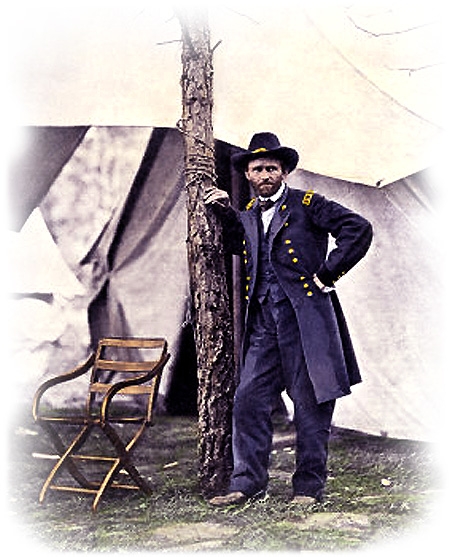
A short paragraph from General Grant’s memoir recalling the the first private interview with President Lincoln, on the occasion in the early spring of 1864 when he was given command of all the Federal armies.

In my first interview with Mr. Lincoln alone he stated to me that he had never professed to be a military man or to know how campaigns should be conducted…


Click here to read about a dream that President Lincoln had, a dream that anticipated his violent death.

Advertisement

Use shortcode [oma_ad position="summary_top"] (or other position) in your theme or widgets to display OMA Promotions here.

When Grant Met Lincoln for the First Time (National Park Service, 1956)
1956, General Grant, The National Park Service

When Grant Met Lincoln for the First Time
(National Park Service, 1956)

A short paragraph from General Grant’s memoir recalling the the first private interview with President Lincoln, on the occasion in the early spring of 1864 when he was given command of all the Federal armies:

In my first interview with Mr. Lincoln alone he stated to me that he had never professed to be a military man or to know how campaigns should be conducted, and never wanted to interfere in them…


Click here to read about General Grant’s Chief of Staff, General John Rawlins.

When Grant was a Colonel (Literary Digest, 1908)
1908, General Grant, The Literary Digest

When Grant was a Colonel
(Literary Digest, 1908)

This Civil War reminiscence was originally printed in a Missouri newspaper and concerned the Union General U.S. Grant (1822 – 1885) when he was a lowly colonel assigned to guard the railroads along the Salt River in Northeast Missouri and how he got along with the local population:


He talked politely in a calm, dispassionate way, and never with heat or anger. Some of those who visited his camp in those days quote him as saying that if he had considered the war merely to free slaves he would have taken his command and joined the South…


Click here to read about
General Grant’s march on Richmond.


Click here to read about the son of General Grant and his memories of his father at Vicksburg.

F. Scott Fitzgerald at Twenty-Five (The American Magazine, 1922)
1922, Recent Articles, The American Magazine, Twentieth Century Writers

F. Scott Fitzgerald at Twenty-Five
(The American Magazine, 1922)

At the peak of his fame, F. Scott Fitzgerald penned this opinion piece for a popular U.S. magazine:


For one thing, I do not like old people – They are always talking about their experience, and very few of them have any! – But it is the old folks that run the world; so they try to hide the fact that only young people are attractive or important.

Advertisement

Use shortcode [oma_ad position="summary_top"] (or other position) in your theme or widgets to display OMA Promotions here.

The American Cemetery at Romagne (Literary Digest, 1919)
1919, Cemeteries, The Literary Digest

The American Cemetery at Romagne
(Literary Digest, 1919)

An eye-witness account of the construction of the American Meuse-Argonne Cemetery in Romagne, France:

They are now gathering up the bodies of the 26,000 American boys who were killed on the Argonne-Meuse battlefield, and are burying them in a great cemetery at Romagne, a little town in the heart of the region where the fighting took place. Here and there all over the battlefield are stakes, each marking the grave of an American soldier who was buried where he fell.

In one of the office buildings a large force of clerks is keeping the records of the dead; no banking firm could be more careful of its accounts than are these clerks…and their superiors of their registration of graves.

Advertisement

Use shortcode [oma_ad position="summary_top"] (or other position) in your theme or widgets to display OMA Promotions here.

Scroll to Top