

The Work of J.D. Salinger
(The Hibbert Journal, 1964)
A Literary journal’s review of The Catcher in the Rye as well as the short stories contained in Salinger’s collection Franny and Zooey.

A Literary journal’s review of The Catcher in the Rye as well as the short stories contained in Salinger’s collection Franny and Zooey.

The military influence on feminine fashion predates the conflict of 1914-1918 by a long shot and the evidence of this is undeniable. These 1918 fashion illustrations show the influence that the war was having on American designers during the final year of W.W. I.
Click here to read about the fashion legacy of W.W. I…
To read about one of the fashion legacies of W.W. II, click here…
Click here to read about the origins of the T-shirt.

The subject addressed in this article pertains to the greatest act of cruelty that was ever thrust upon African-Americans by the white hegemony – for it was the one scheme designed to guarantee their continuing poverty.

Subhas Chandra Bose (1897 – 1945) spent much of the Twenties and Thirties brainstorming with Gandhi and Nehru as to how best they might secure sovereignty for their beloved India. By 1939 Bose broke ranks with his fellows at the Indian National Congress, believing that British rule would end a good deal quicker if the Indians signed on with the Axis.

An article written by David Le Roy Ferguson (dates unknown), an African-American pastor assigned to minister to the black Doughboys posted to the depot at St. Nazaire, France. The men of his flock were stevedores who were ordered to perform the thankless task of off-loading cargo from the various supply ships arriving daily to support the A.E.F.. Aside from working as cooks or in other service positions, this was a customary assignment given to the African-Americans during the war; only a small percentage were posted to the 92nd and 93rd combat divisions.
Pastor Ferguson’s magazine article salutes the necessary labor of these men while at the same time adhering to the usual simple descriptions of the African-American as cheerful, musical and rather crude.

In early March, numerous governors convened and agreed that the WPA was dropping too many dependents from their rolls who were then becoming burdensome to their respective states. The executives then wrote a telegram to the White House insisting that the Federal program stop this practice.

The Federal Theater Project (FTP) was a division of President
Roosevelt’s Works Project Administration (WPA). The WPA was organized in order to dream up jobs for the many unemployed Americans during the Great Depression. They employed manual laborers with the Civilian Conservation Corps, musicians with the Federal Music Project and historians with the Federal Records Survey – to name only a few of the agencies within the WPA. The Federal Theater Project was intended to hire the nation’s actors, costumers,directors and stagehands:
At its peak in 1936, FTP employed 12,500 people…it had puppet shows, vaudeville units, circuses and stock companies traveling through every state.

A printable paragraph from the 1936 pages of Art Digest explaining the aesthetic tastes of President Franklin Delano Roosevelt and his art collection.

– from Amazon: KEY WORDS: Lt General Sir Leslie Moreshead in North Africa 1941,British north african commander Lt General Sir

The deans who presided over Literary Digest made this article their lead piece, so urgent was the sensation that an onslaught of vengeful modernist women, so fleet of foot and irreverently unhampered by hanging hems and confining corsets, were approaching their New York offices as their first act in disassembling the patriarchy.

Major General Lewis E. Brereton (1890 – 1967) is the new commander of the U.S. forces in the Middle East.
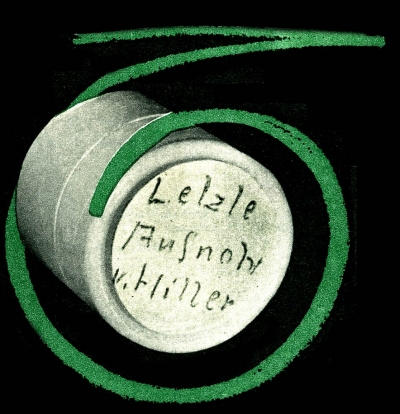
In July of 1945 LIFE MAGAZINE photographer William Vandivert (1912 – 1989) was on assignment in Berlin documenting the earliest days of the Allied occupation of that city. He snapped pictures of Hitler’s bunker, starving Berliners and jubilant Cossacks; his images of the vanquished capital will live forever more – but in this article that he penned for the editors of PAGEANT, he remembered how he came upon a trove of some of the most famous pictures of W.W. II.

As 1936 came to an end in Tokyo, the aftershocks of the February 26, 1936 failed military coup could still be felt throughout the halls of Japan’s Government. The uprising of the military hardliners resulted in four assassinations and a suicide before the constitutional powers regained control. This article covers a more peaceful dust-up on the Parliament floor – and when it was concluded the Generals had the upper hand.
Still the country’s most privileged class, military leaders – modern equivalent of the Samurai, medieval knights – can exert pressure on the government by reason of a 42-year-old imperial edict: the War and Navy Ministries must be headed by army and navy officers; if either resigns, the Cabinet falls.

A well-illustrated 1944 article by Leonard Lyons pertaining to the assorted wartime experiences of ten American war correspondents:
• Martin Agronsky for NBC News
• Vincent Sheean with The N.Y. Tribune
• Henry Cassidy of the Associated Press
• Bob Casey of the Chicago Tribune
• John Gunther of The Chicago Daily News
• Jack Thompson of The Chicago Tribune
• Cecil Brown of CBS News
• W.L. White of the Associated Press
• Quentin Reynolds of Collier’s Magazine
• Cyrus Schulzberger with the NY Times

Published four months after the above article, here is a similar, well-illustrated piece that lists the names of the photographers and reporters who were killed – and the younger breed of writers and lens-men who took their places.

This brief column tells the story of three women war correspondents who marched at the point of the spear alongside the American infantry in order to report on the collapse of Hitler’s Germany. The correspondents in question were:
• Lee Carson in Remagen
• Iris Carpenter in Remagen
• Ann Stringer in the city of Bonn

A thumbnail review of It’s a Wonderful Life written in the form of a favorable plot synopsis. Oddly, the film was released in March of 1947 – long after Christmas.

When the most popular movies of 1947 were tallied up in Photoplay Magazine‘s People’s Choice Award, It’s a Wonderful Life clocked in at number four, having been trounced by The Jolson Story, The Best Years of Our Lives, and Welcome Stranger
